Tuesday, July 05, 2011

Vishvapani and Dorothy Rowe Discuss Buddhism, Science and Reality at the North London Buddhist Centre

Vishavapani writes:
On April 11 I took part in a special event at the North London Buddhist Centre: a dialogue between myself and Dorothy Rowe, a well known psychologist and author. She writes accessible but intelligent books on emotions and psychology with a somewhat subversive slant, the best known being Beyond Fear and Depression: the Way out of your Prison. Now in her 80s, Dorothy Rowe is a respected broadcaster and commentator with an impressive ability to write about common experiences with depth and honesty and express profound ideas with great lucidity.


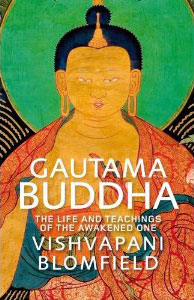
Our connection started when Dorothy wrote appreciatively on her blog about one of my Thought for the Day broadcasts. I proudly put a quote on my website and eventually we got into dialogue. When I came to plan events to launch my book, Gautama Buddha: the Life and Teachings of the Awakened One, wanted to do more than just giving straight talks or Q&A, so I proposed a joint event. As Dorothy lives near the North London Buddhist Centre, where I am the President, I proposed an event there.


Interest was so strong that we did relatively little publicity, relying on local interest and personal invitations. Around 80 people came on the night, many of them friends and contacts from the worlds of British Buddhism, Interfaith, the media and psychotherapy as well as members of the NLBC Sangha and others from Triratna in London. The theme of the evening was focused by Dorothy's most recent book, Why We Lie? She argues that we lie to protect ourselves and that the ultimate reason we need this protection is that our sense of ourselves as fixed, enduring subjects who know for sure what is real is an illusion.


Paramabandhu, a London-based psychiatrist and Order member, chaired the evening. I spoke first, describing the Buddha’s journey to enlightenment and discussing his teachings in terms of truth and lies. I connected Dorothy’s discussion of lies with the Buddhist notion of delusion and suggested that the Buddha spoke of the ‘three great lies’ we tell ourselves: that the elements of our experience are permanent when they are actually impermanent; that they are solid and knowable when they are insubstantial; and that they we can rely on them to make us happy when they are bound up with suffering and unsatisfactoriness.


Dorothy started her talk by saying that "Buddhism is the only set of beliefs that have been proved right by science and have a scientific support." She was thinking of the Buddhist account of the self and approached her understanding of this by discussing the view of human identity that is being revealed by neuroscience She said:


"Our brain constructs things and creates fiction: a picture of the world. That picture is inside my head, but the brain persuades me that it is outside. We see the world as we have learned to see it, not as it is, and we are incapable of seeing reality directly. Some of the ideas the brain creates out of our experience become our sense of being a person. But these ideas are constantly being invalidated, and so we feel anxious and insecure."


Our discussion and the questions we were asked ranged over many topics, and I found the evening stimulating and enjoyable. I was struck that Dorothy’s main topic was, in effect, anatta – the Buddhist teaching that we lack a fixed self and I reflected that the Buddhists I know tend to shy away from this subject, or the connected topic of sunyata, perhaps thinking that it is beyond the level of beginners and perhaps prone to misunderstanding. It was bracing to hear it expressed as a vital truth and one that is confirmed by scientific observation.


I also reflected on how fresh and stimulating it felt to engage in dialogue with a thoughtful and sympathetic non-Buddhist. At times it seemed that the insights of psychotherapy and neuroscience into the human condition were interacting with the Dharma and each was casting fresh light on the another.


You can listen to the dialogue here: http://www.freebuddhistaudio.com/audio/details?num=LOC760


Vishvapani is starting a blog at www.wiseattention.org.

Labels:

Sunday, June 05, 2011

Vishvapani's ‘Thought for the Day’, on Karma

To read more, or listen to the full piece, please visit the BBC website here www.bbc.co.uk/programmes/p00h9b0sVishvapani, an Order Member and regular contributor to BBC Radio 4’s ‘Thought for the Day’ program, writes -

“Here’s a link to my most recent ‘Thought for the Day’, on karma.

He begins his piece by saying “My relief that the Bosnian Serb commander Ratko Mladic is at last being subjected to international justice has a personal dimension. My father’s family were Jewish victims of the Nazis and my grandfather died in Sobibor Concentration Camp, so I feel a particular resonance with accounts of Central European genocide. Most chilling for me, and most reminiscent of the Nazis, was the cool deliberation behind the Srebrenica massacre when the state turned its power on Bosnian Moslems killing 8,000”.

His previous post, is also available. Celebrating the recent Buddha Day festival, he manages to explain ‘What is Enlightenment?' in 2 mins 45 secs!


Labels: ,

Thursday, May 12, 2011

In Conversation with Vishvapani About ‘Gautama Buddha’

Free Buddhist Audio

Spreading the Dharma

Sharing our Practice

Connecting our Community Worldwide


This is the second part of our celebrations to mark the launch of Gautama Buddha, a major new series of talks by Vishvapani available now on Free Buddhist Audio.

Read Part 1

Viriyalila, FBA’s head of community development, was present for the opening talk of the series, given in Manchester in the UK, where she picked up a copy of Vishvapani’s new book, Gautama Buddha - The Life and Teachings Of The Awakened One. She met with him at the local café to discuss the writing of a substantial piece of new work on the Buddha. Sitting with a cranberry scone and a latte, Vishvapani described how this book has become his main project over the last 3 years.

Commissioned to write the biography by Quercus, he quickly found himself involved in a much bigger endeavour than he had imagined:

“I thought there were already lots of books on the Buddha that you could turn to and get a reasonable idea about what he was like and what he did in his life. The first surprise was discovering that there actually aren’t books like the one I’ve written. There are many books that retell the legends and there are books that treat the historical Buddha fairly briefly, but I wanted to do more then just retell the legends…”

Vishvapani talked about wanting to get as close as he could take us to the Historical Buddha. “Being a Buddhist myself, I didn’t want to do it as a scholar would do, for me the Buddha was enlightened, that’s my starting point when I read those texts…The book is very thorough. In terms of using the Pali Canon as a basis for a biographical portrait of the Buddha there is no other book that is anything like as substantial as this…”


Vishvapani - On Gautama Buddha from Triratna Buddhist Community on Vimeo.


Viriyalila was interested in understanding how Vishvapani’s Buddhist practice influenced his writing of the book:

“Because I am a Buddhist, I don’t question that the Buddha was enlightened, I take it that he was Enlightened and that the suttas, to a more or less accurate degree, represent his efforts to explain his understanding of his life and communicate that to people.”


Vishvapani - On Enlightenment from Triratna Buddhist Community on Vimeo.

Reflections from FBA

All of us on the team at Free Buddhist Audio have appreciated the opportunity to work closely with Vishvapani to bring this series to our audience, doing extensive work to provide you with the best quality audio recordings and highly detailed indexing of the talks themselves.

We'd like to bring you a special reading from the book, given in the talk The Buddha's Vision (Bristol Buddhist Centre, Feb 2011), the story of Bahiya set in the context of historical time, place and lifestyle:


There is much that is important for reflection here – the Dharma made fascinating by dint of the author's depth of engagement with Buddhist practice and the sheer breadth of his cultural reference.

Join the FBA Community!


Subscribe to a weekly Dharma talk with our FBA Podcast along with our brand new Dharmabytes to hear more on this fascinating series.


FBA needs your support! Become a Supporting Friend to Free Buddhist Audio, dedicated to providing free access to Dharma talks.


Vishvapani

Vishvapani is a Buddhist writer and teacher based in Cardiff, Wales. He discovered meditation and Buddhism at the age of 14 and became a Buddhist soon after. He became a member of the Triratna Buddhist Order in 1992. See Vishvapani’s 2009 Triratna Buddhist Order Convention talk, ‘Recollections of the Buddha’.

Vishvapani is a regular contributor to BBC Radio 4’s Thought for the Day. He will be broadcasting in that slot on Radio 4's 'Today', the main UK radio breakfast news programme, on May 17 (for Wesak), May 25 and June 2 at around 7.48 am GMT. These will be available as a podcast and on the Thought for the Day Website. He will be a panelist on the BBC1 ethical debate programme 'The Big Questions' at 10.00 am on Sunday 15th May, available afterwards on BBC iPlayer.

Labels: , , ,

Tuesday, May 10, 2011

Free Buddhist Audio Presents, ‘Gautama Buddha’, A Major New Series by Vishvapani

Free Buddhist Audio

Spreading the Dharma

Sharing our Practice

Connecting our Community Worldwide


Over the past few months, Vishvapani has delivered a significant new series of talks, Gautama Buddha, to launch his book ‘Gautama Buddha – Life And Teachings Of The Awakened One’ (Quercus, 2011). Now available exclusively on Free Buddhist Audio, this superb five-talk series highlights various key themes woven into the legendary accounts of the Buddha’s life and the historical records of his great vision of reality that have come down to us through the ages.

Gautama Buddha - New Series Now Available at Free Buddhist Audio


Listen to FBA Dharmabyte – "Engaging with the Historical Buddha”

Bringing a broad cultural awareness and a depth of personal practice to bear on his subject, Vishvapani's biography of Gautama takes us into the world he inhabited, offering glimpses of the Buddha's personality and exploring his relationship with nature and his own society as evidenced in the earliest Buddhist texts. The insights afforded into our own conditioning and cultural context are both profoundly revealing and challenging.

The talks are supplemented by a bonus recording of a fascinating discussion between Vishvapani and renowned psychologist Dorothy Rowe on ‘Buddhism, Science and Reality – How Can We Understand Ourselves?’

Gautama Buddha: The Life and Teachings of Awakened One

Vishvapani speaks eloquently throughout his series about the experience of writing his book and of his desire to portray the historical Buddha as closely as possible. For the more we see the Buddha in his own time and place – the more we can see him in his historical specificity –the more likely we are to understand his teachings. Vishvapani wished to bring to life: “The person who actually lived, walked, and breathed, who was involved in a society, the person who was trying to convince the people around him that he was telling the truth, that he had gained some kind of wisdom, that Buddha…”

He explains, “How can we write a life of someone who is beyond ordinary experience? The reason we can is that after his Enlightenment, the Buddha devoted himself to communicating what it was through his teachings, through his examples, through his actions, and through the character of community established. Writing about the Buddha, reading about the Buddha, is really a way of contemplating the Buddha.”


Listen to FBA Dharmabyte - "'Knowing' the Buddha"

‘Gautama Buddha – Life And Teachings Of The Awakened One’ (Quercus, 2011)

The New 'Gautama Buddha' series available on Free Buddhist Audio


Vishvapani

Vishvapani is a Buddhist writer and teacher based in Cardiff, Wales. He discovered meditation and Buddhism at the age of 14 and became a Buddhist soon after. He became a member of the Triratna Buddhist Order in 1992. See Vishvapani’s 2009 Triratna Buddhist Order Convention talk, ‘Recollections of the Buddha’.

Vishvapani is a regular contributor to BBC Radio 4’s Thought for the Day. He will be broadcasting on that slot Radio 4's 'Today', the main UK radio breakfast news programme, on May 17 (for Wesak), May 25 and June 2 at around 7.48 am GMT. These will be available as a podcast and on the Thought for the Day Website. He will be a panelist on the BBC1 ethical debate programme 'The Big Questions' at 10.00 am on Sunday 15th May, available afterward on BBC iPlayer.

Labels: , ,

Sunday, April 10, 2011

Vishvapani discusses his new book 'Gautama Buddha' on the BBC

Vishvapani’s new book ' Gautama Buddha: The Life and Teachings of the Awakened One'  features  in a new episode of the award-winning BBC program All Things Considered, a weekly exploration of religious, spiritual and moral issues.  It’s available for the next two weeks as a podcast from  www.bbc.co.uk/podcasts/series/atc .  His interview starts about ten minutes in and is about 15 minutes long  (in the first ten minutes you’ll hear singer/songwriter Nia Price reflect on her 25 years in the Christian music business).

The programme blurb says “Gautama Buddha and his journey of self discovery is one of the major religious narratives of history - but separating fact from fiction has often been a challenge for his followers.   In this week's programme Peter Baker talks to writer and broadcaster Vishvapani Blomfield who has presented his own view in a new biography, in which he seeks to define the truth about the life and teachings of this seminal cultural figure”.

There's a number of reviews of the book appearing on Amazon, and the book itself should be available from all Triratna bookshops and other stores.  

Labels: ,

Monday, March 07, 2011

Vishvapani, member of the Triratna Buddhist Order and a regular on BBC Radio 4’s ‘Thought for the Day’, writes to say - “I've had a little spate of broadcasting recently. On Friday I did another Thought for the Day, which is available here:  www.bbc.co.uk/religion/programmes/thought/week.shtml.  

"I'll be doing another one on Friday 11 March at 7.45-7.50 am on BBC Radio 4.

"And on Sunday 6 March I was a panellist on discussion programme on BBC1 called The Big Questions, which is available here: www.bbc.co.uk/iplayer/episode/b00zfmhx/The_Big_Questions_Series_4_Episode_9/

Meanwhile his  new book, ‘Gautama Buddha: The Life and Teachings of the Awakened One’ has been appearing on bookshop shelves around the Triratna Buddhist Community.  It’s been attracting some great reviews, for instance this by Dorothy Rowe, Psychologist and author of Beyond Fear, who says -  ‘Master of clarity and simplicity, Vishvapani presents, through the life of Buddha, an understanding of Buddhism of immense relevance to the way we live now’.

Labels: ,

Wednesday, January 05, 2011

Gautama Buddha — a new book by Vishvapani

News is just in of a much awaited new book by Vishvapani. Gautama Buddha: The Life and Teachings of the Awakened One is published on January 6th in the UK and Commonwealth by Quercus Books in a handsome and substantial hardback volume. Vishvapani is well known in Triratna as the former editor of Dharma Life magazine and the Buddhist voice on BBC Radio 4’s religious comment slot, Thought for the Day. He writes:

“When I was approached by Quercus four years ago to write a biography of the Buddha I assumed that there were already other books that did the job. The first surprise was realising that there really aren’t. There are short works, books that simply present the early biographical sources and many works that retell the legends around the Buddha as well as novels, poems etc. But there was really nothing that treated the Buddha biographically, basing itself on the early sources in the light of what history and scholarship tell us about them.

"Writing Gautama Buddha has been quite a journey. I had to become much more familiar with the Pali sources and the scholarship around them, and also to use my imagination to conjure up the Buddha’s world, which was so different from ours. I needed to cut through the legends that are such familiar parts of the Buddha’s biography but can make him into a figure from a fairy tale world, not a real person with genuine struggles. Returning the Buddha to history showed up his amazing originality and penetration. For example, the ancient Indians were terrified of the world of the forest and the dangerous spirits who, they believed, lived there. I think that by confronting his own fears the Buddha discovered a new way of experiencing the natural world and, in turn, that transformed the perspective of his disciples.

“I tried hard to avoid what most books on the Buddha offer: a biographical account up to the Enlightenment, then a chapter on ‘the Teachings’ and finally a canter through the last year of his life. I wanted to show that the teachings were integrated with Gautama’s life and experience. The problem is that chronology largely disappears from the sources in the period between the Enlightenment and the final few years of the Buddha’s life, but we can trace how he developed his ideas through dialogue and debate with other religious practitioners. We can also trace how the Buddha created practices that enabled his disciples to see life as he saw it; how he established a new kind of renunciate community, navigating all sorts of problems as he went; and how that community found a place in the wider society and even tried to change it. We have the a detailed account of the Buddha’s last year, and the tremendous dignity of his Parinirvana, but his final years also seem to have been a time of crisis for the community and the region he lived in. The wider story is about how an Awakened individual with an utterly unfamiliar and deeply challenging message became a force in the world. His influence eventually produced a vast spiritual tradition and a Buddhist civilisation.

“It’s quite a story, and I don’t think it has been fully told before in this way. I hope that Buddhist readers will learn something on every page about the world the Buddha inhabited and why he expressed himself as he did. My experience in writing the book was that this brought me much closer to him. Bhante has recently stressed that the Buddha’s core teachings are the basis of the Triratna approach to the Dharma and emphasised the importance of imagining the Buddha. I hope my book will help people to see those teachings more clearly and imagine the Buddha more vividly by seeing him in his historical setting.”

Dorothy Rowe, psychologist and author of Beyond Fear, comments ‘Master of clarity and simplicity, Vishvapani presents through the life of Buddha an understanding of Buddhism of immense relevance to the way we live now.’

Gautama Buddha: The Life and Teachings of the Awakened One
By Vishvapani Blomfield
Quercus Books, 2011, £25 h/b.  you can buy a copy here, or read more about the book at www.gautamabuddha.info

Book Launches and Events:

23 Jan - Study Day (Manchester Buddhist Centre)
24 Jan - Manchester (Manchester Buddhist Centre)
28 Jan - Cardiff (Cardiff Buddhist Centre)
21 Feb - London (London Buddhist Centre, Bethnal Green)
24 February - Birmingham (Birmingham Buddhist Centre)
28 Feb - Bristol (Bristol Buddhist Centre)
10 April - Study Day (North London Buddhist Centre)
11 April - London: in discussion with psychologist Dorothy Rowe (North London Buddhist Centre)

Labels: ,

Thursday, May 27, 2010

Thought for the Day tomorrow on Radio 4

Vishvapani, a long-standing member of the Triratna Buddhist Order, is a regular contributor to the BBC’s popular Radio 4’s ‘Thought for the Day’, broadcast daily at around 7.45 UK time. His next slot on the programme is tomorrow - he says “my next talk is on Friday 28th May, which is Wesak, and I'll probably do something topical”.

You can hear him by tuning to BBC Radio 4, or on-line at www.bbc.co.uk/religion/programmes/thought.

He goes on to say “I'm not sure if this is of general interest, but here's a link to an interview someone did with me on the nature of happiness.”

Labels: ,

Tuesday, April 20, 2010

Vishvapani's 'Thought for the Day' on the UK election

Vishvapani - a regular contributor to BBC Radio 4's 'Thought for the Day' program - writes to say:

"My Thought for the Day from Saturday is now online. It struck me that the situation of voters perplexed by competing election candidates [in the upcoming UK General Election] is quite like that of the Kalamas, who told the Buddha they were confused by the claims of rival religious teachers..."

You can listen to his piece, or read a transcript, here -

Listen now: www.bbc.co.uk/religion/realmedia/thought/t20100417.ram
Read: www.bbc.co.uk/religion/programmes/thought/documents/t20100417.shtml

An archive of his contributions to the programme is available on the BBC website here.

Labels:

Tuesday, June 30, 2009

Thought for the Day with Vishvapani - tomorrow


FWBO News readers are invited to tune in to BBC Radio 4 tomorrow (Weds 1 July) for another instalment of Vishvapani's 'Thought for the Day'.

He will be on at 7.50am, perhaps a couple of minutes earlier, on the very popular Today programme. The talk will be available soon after that on the BBC website: www.bbc.co.uk/religion/programmes/thought; and if you want more; there'll be another chance on the morning of Fri 17 July.

In addition, all previous contributions are available here.

The Today programme is one of the BBC's most-listened-to programmes, with a daily audience of over 5 million people. His previous contribution, in the wake of the UK's parliamentary expenses scandal, began "Perhaps it's the end of the culture of deference…"

Vishvapani's website is at www.vishvapani.org

Labels: ,

Saturday, November 29, 2008

Events in Mumbai: reflections by Vishvapani

Events in Mumbai have dominated international headlines this week. In India, Buddhists are in a tiny minority compared to the Hindus and Muslims. But what might their position be following such an outrage?

Readers of FWBO/TBMSG News may be interested in Order Member Vishvapani’s calm reflections, broadcast on the UK’s Radio Four ‘Thought for the Day’, to an audience of many millions. You can listen to, or read his words on the BBC website.

He concludes -

“Compassion requires the courage to face suffering steadily with an open, kindly heart. That brings understanding, and that rouses us to action. The intended product of terrorism, by contrast, is 'terror'. Declaring a 'war' on that terror won't show the way out of cycles of violence and reprisal. We can only find a path beyond terror by facing it directly.”

To all afflicted by suffering we would add, in the words of Shantideva –

“May all sentient beings possess happiness
And the causes of happiness;
May they be separated from suffering,
And the causes of suffering;

May they never be separated
From the happiness that knows no suffering;
May they abide in equanimity,
Free from attachment and aversion”.

Labels: , ,

Saturday, September 06, 2008

Ambedkar Day in north London - coming up soon...

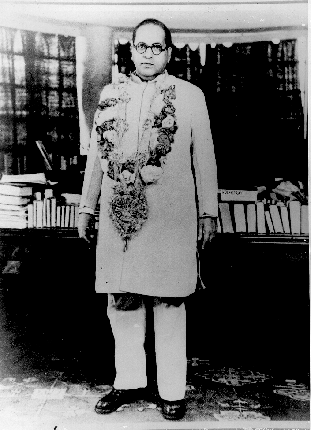
An early portrait of Dr. Ambedkar, probably taken in the 1940sThe second annual Ambedkar Day at the FWBO’s North London Buddhist Centre is coming up on Saturday 13th September 2008,.

It’s been created to celebrate the life, work, and legacy of Dr. Ambedkar, who died in 1956 but is still the inspiration to millions upon millions of India’s new Buddhists. More than almost anyone else, he demonstrated the need for Dhamma practice to address both the individual and the world – inspiring Sangharakshita, and though him, the whole FWBO/TBMSG with this vision.

It’s looking to be a rich and full day, running from 10 am – 10 pm, offering a feast of events and information put on by a wide variety of groups, both FWBO and other. There’ll be talks by Vishvapani on ‘Indian Buddhism now’ and Tejadarshan on Ambedkar’s Dhamma Revolution; a display by the Dalit Solidarity Network on their campaign against manual scavenging (still endemic in India) two showings of ‘Recurring Dreams’ (Suryaprabha’s new film on TBMSG and Indian Dhamma. There’ll be a selection of workshops and presentations, including Saul Deason will be reporting on his recent visits to India and to followers of Dr. Ambedkar in Hungary. There’ll be Bollywood Dance by Ramesh; Hindi chanting, and DVDs and books on Caste on sale in the foyer – and even, for those needing a bit of peace and quiet, meditation workshops!

It’s been timed to coincide with the local borough Islington’s InterFaith Peace Week and local councillors are expected to attend.

Saul Deason, the organiser, describes his mission being “to encourage active support for Ambedkarite projects and to broaden the support for them among Buddhists and others”.

Labels: , , , ,

Thursday, April 17, 2008

Wheels Turning in Sarnath

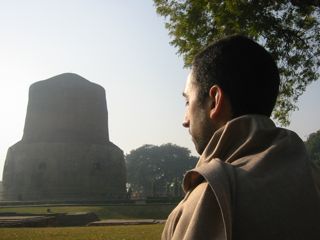
Each of the pilgrimage places associated with the life of the Buddha has its own atmosphere. Bodh Gaya, where the Buddha gained enlightenment, is a vibrant focus for practice and devotion for Buddhists from around the world; Vultures Peak, the site of many important discourses, remains a remote and beautiful spot; and Sarnath, where he first shared his teaching, has an atmosphere of quiet concentration. Several ancient stupas mark the spots where his former disciples first saw him approaching; where he gave his first discourse; and where he later taught others who had come from the nearby Hindu holy city of Varanasi.

Across the road from the main site and set back a little is land belonging to the FWBO/TBMSG. To date, only a small building has been erected on here, but it hasn’t been unused and plans are afoot to create an international study centre. There’s another, separately administered, plot of land in Bodh Gaya.

On February 3rd Vishvapani gave a talk on the land on ‘The Unity of Buddhism’, which was attended by around fifty people. Most were dalit followers of Dr Ambedkar, tens of thousand of whom became Buddhists in the 1960s. However, there has been little follow-up in the following years, despite the presence of many Buddhist teachers in Sarnath. Two years ago Dhammachari Shantighosha moved from Pune (in the TBMSG heartland, many miles to the south) to look after the land and work with local Buddhists. The people attending Vishvapani’s talk had gathered as a result of Shantighosha’s work, and over the next three days Vishvapani and Kamalagita led a retreat for ten local dhamma-mitras.

Vishvapani reports: ‘I was very impressed by their appreciation of Shantighosha and by their enthusiasm for he Dharma. Asit, one of the mitras on the retreat, collects scrap metal, and whenever he visits a locality he gathers people around and he tells them whatever he has just learned about Dr Ambedkar and Buddhism.’

The retreat came at the end of a pilgrimage in which Vishvapani, Kamalagita, Vidyadaka and Phil Daley were taken around the Buddhist holy places by Manidhamma and his wife, Samantha. Manidhamma has recently returned to India after six years study and training in the UK, and the pilgrimage benefited from his deep knowledge of the Buddha’s life and considerable experience of pilgrimages. He plans to lead many more in the coming years.

Manidhamma is working with Manidhamma is working with the Dhammaloka Trust, which intends to develop the Sarnath study centre. Their ambitious plans include a pilgrim’s guest house, a shrine room and an library and study centre that will host courses and retreats for people around the world. He also hopes to develop contacts between Sarnath’s cosmopolitan Buddhist community and the local Ambedkarite Buddhists.

The project has Sangharakshita’s blessing, but it will depend on donations from outside India. If you would like to learn more about the project or help support it, contact The Dhammaloka Trust.

Text by Vishvapani

Labels: , ,

Tuesday, November 27, 2007

More Buddhists on the radio...

Kavyasiddhi is presenting five night-time Pause for Thoughts which will go out on BBC Radio 2 this week Monday – Friday, beginning November 26th.

She says "If anyone wants to hear my latest two minute dharma talks for non-Buddhist shift workers & insomniacs, I invite you to tune to the Janice Long Show at 1.30 and 3.30am - yes, that is the middle of the night, ie very, very early a.m!"

If you don't get up in time you can listen to her again by clicking here and then selecting the day of the week.

Vishvapani is doing BBC Radio 4’s ‘Thought for the Day’ on the Tuesday 27th November, and the following two Tuesdays ie Dec 4 & 11 , all
at 7.50 am. Listen to him again here.

Labels: , , ,

Monday, August 20, 2007

Mindfulness for everything?


Click here to read Vishvapani’s survey of the growing field of mindfulness-based therapies and the place of the FWBO therein.

He sets the scene by saying “The faculty of mindfulness—broadly defined as non-judgmental present-moment awareness—has always been a key element of the Buddhist path; and in recent years psychologists and healthcare professionals have been recognizing its value for people experiencing conditions ranging from stress and depression to addiction, chronic pain and ill health. A natural crossover exists between this growing medical interest in mindfulness and the skills that FWBO meditators and teachers have developed in their years of practice.”

And he asks – “So how are people from the FWBO engaging with MBTs, and what issues are emerging as they do so?”

A fascinating and inspiring read – one of the many facets of the great adventure that is the Dharma coming to the West.

Labels: , , , ,

Tuesday, July 24, 2007

FWBO Discussion website launched

A new website, 'FWBO Discussion' (www.discussion.fwbo.org), has recently been launched. Building on work done by Vishvapani, it’s a collection of articles by members of the Order, with the aim of presenting some of its more internal reflections and discussions, plus various accounts of the main changes in the FWBO and Order over the past decade or so. Vishvapani introduces the site by saying "The Friends of the Western Buddhist Order is a diverse and thoughtful community, whose members frequently debate matters of teaching and issues affecting the FWBO, its history and its future. This debate has often been invisible to non-members, and this site aims to open that debate and reflection to a wider audience."

The site is divided into various sections – ‘The Order’, ‘Changes’, ‘Controversy’, ‘Sangharakshita’, ‘Gender’, and ‘Academic’ (a bibliography of academic articles on us).

Lokabandhu, the current editor of the site, says "I'm very pleased with it, I think it’d be impossible to read it and not conclude that we (the FWBO) is a serious, open-minded, self-aware buddhist community with genuine independence of mind and interest in the truth. Comments welcome of course! I'd like to add to it, so if you have any suggestions please let me know."

Labels: , ,

Monday, June 11, 2007

Two regular guests on BBC Radio...

FWBO News has come to learn that two members of the Western Buddhist Order are regular guests on BBC Radio.

Nagaraja from the Glasgow Buddhist Centre is a long-standing regular on the ‘Pause for Thought’ slot on the Terry Wogan show. You can listen to his latest reflections (arising from his 46th birthday), broadcast this week, by clicking here for the transcript or here for the audio.

You can hear Vishvapani, also a regular contributor, on Radio 4’s ‘Thought for the Day’, part of the peak-time ‘Today’ program, by clicking here for the last episode, or here for the archives.

Labels: , , ,

Wednesday, May 09, 2007

FWBO Authors

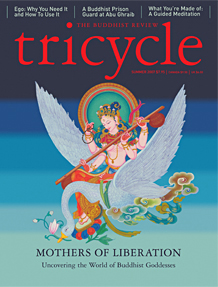
Tricyle Cover ImageYou might want to read the Summer 2007 edition of Tricycle magazine which features three FWBO Authors. Bodhipaksa's exposition on the six-element practice is an "editors pick" and therefore on the website. He introduces the practice which he describes as both highly analytical, and intensely poetic. Vishvapani who is becoming a regular in Tricycle wonders whether our new Buddhists in India hold the key to ending Sri Lanka's decades-long civil war. And finally Montreal based mitra Vanessa Sasson writes about conflict and the images we have of foreigners. The articles by Vanessa and Vishvapani are only available online to subscribers.

The issue also includes an article about Michael Dillon who was possibly the first person in the UK to have gender reassignment surgey from female to male. He studied medicine and became a medical doctor. Seeking to escape the glare of publicity Michael fled to India with the intention of becoming a Buddhist Monk. He headed for a monastery in Kalimpong run by an Englishman known as Sangharakshita who gave him the Buddhist name Jivaka. Jivaka lived with Sangharakshita for a time and acted as his secretary. He actively opposed Dillon's ordination on the basis that he was born female and was therefore not eligible. Jivaka died in India in 1962.

Labels: , , , ,

Monday, April 09, 2007

Death of Maha Ghosananda

Maha Ghosananda The Guardian Newspaper recently published an obituary written by Vishvapani for Maha Ghosananda the Cambodian Buddhist leader and peace activist.

He was a leading figure in the revival of Buddhism in Cambodia following the period of the Khmer Rouge killing fields. Vishvapani comments, 'I approached The Guardian about writing obituaries of Buddhist figures just before Maha Ghosananda died. I knew a little about his work and his reputation as a very saintly and compassionate man, but I was moved to learn more in writing this piece. He deserves to be as well known as figures like Thich Nhat Hanh, but he never taught in the West and wasn't a writer.'

Maha Ghosananda was also the spiritual head of the International Network of Engaged Buddhists

Vishvapani's
article on Dr Ambedkar and recent dalit conversions to Buddhism is published in the most recent issue of Tricycle magazine. An article on Buddhism in Tamil Nadu will be in the next issue. He will be broadcasting on BBC Radio 4's Thought for the Day on Wednesday 11 April at 07.45, and will be doing three more broadcasts on 2, 9 and 16 June.

Labels: , ,