Tuesday, April 06, 2010

Foundation stone laying ceremony for Amaravati sangha

Big news is just in from Amitayus at the FWBO/TBMSG’s thriving sangha in Amaravati, central India, where they have big plans for a new social/dhamma centre to accommodate their growing activities.

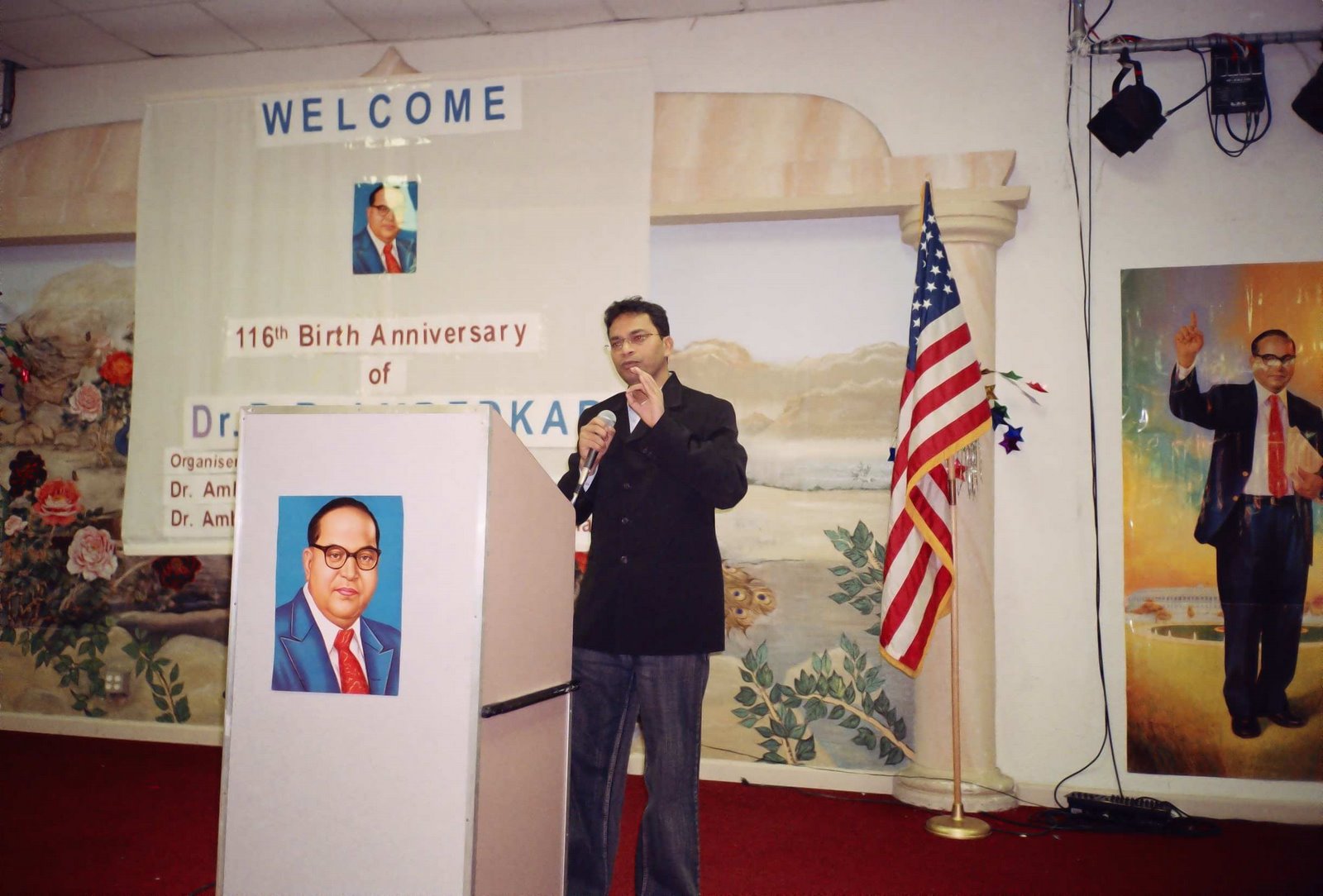
The new centre has just received its name from Sangharakshita - it’ll be known as the Anathapindaka Vihara. They are celebrating by conducting the foundation stone laying ceremony this 14th April - which Indiaphiles will recognise as the 119th birth anniversary of the great dhamma and social revolutionary Dr. Babasaheb Ambedkar.

Amitayus writes -

“Dr. Babasaheb Ambedkar’s birth anniversary and foundation of new Anathapindaka Vihar and Social Work Centre at Amravati will be marked by laying the foundation stone by the auspicious hands of Dhammachari Lokamitra the pioneer of TBMSG-FWBO in South Asia.

Urgyen Sangharakshita named this project and gave us his blessing in the following words -

"I am delighted to learn that, with the help of the Dhammamitras, the Dhammacharis and Dhammacharinis of the Vidharbha region are establishing a centre where the Dhamma can be taught and from which social work can be carried on.

“I heartily congratulate all those who are involved in bringing this noble and worthwhile project to a successful conclusion.

“Dr Babasaheb Ambedkar's Dhamma revolution has brought the Buddha’s sublime message to millions of people who were living in darkness and it is our duty to continue the mission he started.

“Social work must be based on the principles of the Dhamma, and the Dhamma must find expression in social work. The institution you are establishing therefore has this double function, i.e. to be a place where the Dhamma is practised and taught and from which social, educational, and medical activities are conducted. I am confident that with the support of all concerned it will be a source of blessing to hundreds of thousands of people within the Vidharbha region.

(sd) Sangharakshita"


“Anathapindaka was a leading disciple of the Buddha. His name means ‘He who gives food to those who are without a protector’, i.e. to orphans and to those who were destitute. Thus he is associated with both the teaching of the Dhamma and with helping the poor and distressed.

“The venue for the ceremony is our proposed site, at Bhumiputra Colony, Congress Nagar, Amaravati. It will be great to see you on this event.

“At Amaravati we serve urban, rural and tribal Buddhists - in fact we are the second biggest Dhamma and social centre after Nagaloka in Nagpur. The need of our new centre arises due to the long-lasting demand of infrastructure from the local Buddhists and those who want to know and practice the Dhamma - both new Buddhists and non Buddhists.

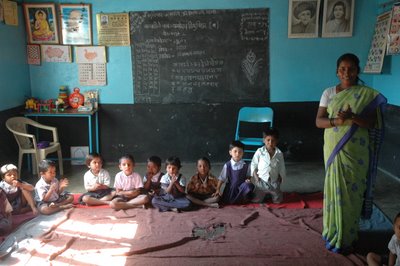
Children's activities at Amaravati
“This new infrastructure will replace the existing rented building that we use for our social activity including HOSTEL, YOUTH, WOMEN AND CHILD Empowerment programmes. Other needs that this building will satisfy are

• Shelter for the hostel boys from rural tribal areas  seeking Residence for their education
• Women’s and children training and guidance centre
• Youth empowerment, training and employment centre .
• Community Hall.
• Bahujan Hitaya project office.
• Vihar and residence for guest and trainees.

“The local sangha appeal and request all of us to bless and contribute to this project by supporting financially, giving time and skills which will highly be welcome.

If it is easy for you to donate online then please just click www.justgiving.com/AnathapindakaVihara. Your donation will be highly helpful.

Please reply your support, involvement, and feedback to dhammachari_amitayus@rediffmail.com

Labels: , , , ,

Wednesday, March 03, 2010

Bahujan Hitay Amaravati celebrates with annual festival

Amitayus, an Indian Order Member from TBMSG’s vibrant Amaravati centre in central Maharastra, writes with news of their recent annual festival, organised to celebrate a very successful 2009. He says -

“Jaibhim and many good wishes from Bahujan Hitay project Amravati.

“It is our pleasure to let you know that Bahujan Hitay project Amravati has organized the Bahujan Hitay annual festival. Participants included beneficiaries, indirect beneficiaries, stakeholder’s staff, donors, well-wishers and management. It is a reflection of our year long success, and for the first time we made it for four days in length, from 9-12 February.

Events included sports events for the Staff and the cultural activities for our direct and indirect beneficiaries and stake holders. The concluding ceremony on 12 February was presided over by Dhammachari Nagabhadra, Chairman of our Bahujan Hitay project management committee.

Some sense of the breadth of Amaravati’s activities can be found from their annual report - available on the Resources page of FWBO News at www.fwbo-news.org/features/Amaravati_annual_report_2007-8.pdf

Labels: , , ,

Sunday, February 07, 2010

Interview with Subhuti: Ambedkar, Buddhism, and the world today

Insight Young Voices is an on-line Dalit Youth Magazine currently featuring an interview with Subhuti, a long-standing member of the Western Buddhist Order and leading light in TBMSG’s Dhamma work in India.

Anoop Kumar, the interviewer, explores with Subhuti the specific difficulties - and opportunities - faced by Buddhism in the world today - in fact in the ‘three worlds’ of the old Buddhist world, the new Buddhist world of the West, and the revived Buddhist world of India.

The interview can be found online at http://blog.insightyv.com/?p=1155

To quote two of their exchanges -

Buddhism being reduced just to a new caste is indeed a great danger and we clearly witness this happening around us. How do we overcome this?

Subhuti: "We must overcome this danger of the marginalisation of Buddhism, referring back to Dr Ambedkar’s thoughts on conversion: Why did he choose Buddha Dhamma? According to him, liberty, equality and fraternity can only be attained when there is a completely different set of ethical attitudes in Indian society. In a caste-based society one does not see another person in terms of duties towards him or her as a human being, but as a member of a particular caste that stands in a particular relation to one’s own caste. Babasaheb says that this is not really ethics at all. Dr Ambedkar’s great insight was that society has to be based on some genuine ethical principles, not the pseudo-ethics of caste duty".

Buddhism is one of the world’s major religious traditions and therefore building linkages with wider Buddhist world was one of the main concerns of Babasaheb Ambedkar. As a practising Buddhist who is deeply involved with Buddhism as defined by Babasaheb, what are your observations on the wider Buddhist world?

Subhuti: "Buddhism generally covers three worlds today: the old Buddhist world, the new Buddhist world of the West, and the revived Buddhist world of India.

"The old Buddhist world of the East is not in good shape. There are signs of revival here and there, but it is severely battered by modernity and is often not impressive today as an example of a living faith, related to the modern situation. There are impressive people and impressive movements, but Buddhism overall is not that impressive in its old heartlands. The example before us at present is, of course, Sri Lankan Buddhism, a significant and leading proportion of whose followers are, frankly speaking, racists and have used Buddhism as a weapon of cultural dominance.

"Then, you have got the new Buddhist world of the West that has emerged from what has been called the ‘Me generation’, which I myself in fact came from – spoilt children of the post-colonial west who have lived with silver spoons in their mouths and face quite different sets of problems from their brothers and sisters elsewhere in the world, problems more of personal meaning and happiness. There is a strong tendency to individualism among western Buddhists and the Dhamma is often interpreted in quite narrow personal terms.

"Then you have got Buddhist India, which I think is a very interesting intersection of the other two. For me, India is the key to the revival of Buddhism worldwide, because here the Buddhist movement is uncompromisingly modern and has a social conscience, as well.

"This happened because Babasaheb, at least from one side, was the child of the European enlightenment, with its critical intellectual tradition, and at the same time he was also the child of the best of Indian culture: of the whole non-brahmanical shramanic traditions, of the Sant traditions represented by such as Kabir and so on, and above all of the Buddha.

"So the movement initiated by him has the intellectually critical approach - if you like, the scientific approach - that is a principal feature of the modern world. Indian Buddhism is modern in this sense; on the other hand it is functioning in a traditional society with intact family structures, which we have lost to a considerable extent in much of the west, and it has a very strong commitment to social transformation.

"In some ways, our Western Buddhist world shares more in common with India than the old Buddhist world of the East, because in our case we also started from a critical perspective. We in the west feel ourselves very much Buddhist, very much part of the Buddhist tradition, but we are not going to accept all aspects of it uncritically, and that is the position you take in India, following Babasaheb.

"However, although there are similarities between Indian Buddhism today and western Buddhism, there are also discontinuities and some of these we should be careful to maintain. I don’t want to see western individualistic attitudes imported into India – although that is already happening, of course".

There's other introductions to Ambedkar and Buddhism in India in the writing of Vishvapani and Lokamitra

Labels: , , ,

Wednesday, December 16, 2009

International Network of Engaged Buddhists (INEB) celebrates 20th anniversary


The International Network of Engaged Buddhists (INEB) recently celebrated its 20th anniversary at Chiang Mai, Thailand, in the course of which Lokamitra led a retreat for over 100 participants from all over the Buddhist world. Priyadarshi Telang, from TBMSG's Jambudvipa project, sends us his report. He says -

"The International Network of Engaged Buddhists (INEB) celebrated its 20th anniversary November 9th-17th at the at Chiang Mai, Thailand, November 9th-16th with a variety of activities. Over the last few years links with INEB have grown; Lokamitra is at present a member of their advisory committee, while Mangesh Dahiwale is a member of their executive committee. INEB was founded by Sulak Sivaraksa, who at the age of 76, is beginning to withdraw from the front line of INEB activities.

"The conference therefore also marked this period of transition with the formation of larger and more diverse advisory and executive committees, as well as a secretariat more able to coordinate the fast growing network.

Sangha and Kalyanamitra

"The celebrations started with a three day retreat led by Dhammachari Lokamitra. This was attended by about 100 participants from 16 different countries. The participants included almost 30 bhikshus and bhikshunis from Sri Lanka, Thailand, Laos, Ladakh, and Bhutan. Indian participants included Maitrivir Nagarjuna from the New Delhi centre, Pradeep Bansode, Priyadarshi Telang and Mangesh Dahiwale from Jambudvipa Trust, Deepak and Manish from Nagarjuna Training Institute, Anand Shakya from Karuna Vihar Hostel, Gujarat, and Anurag Meshram and Sumedh Sthool, social activists connected with The Jambudvipa Trust. Ratnadharini, from Tiratanaloka, UK, also attended.

"The idea of the retreat was to provide a situation in which people could experience deeper communication on the basis of going for refuge to Buddha, Dhamma and Sangha, as a prelude to the four days of discussions that followed. The theme was “Sangha and Kalyanamitra”. INEB is trying to operate according to the principles of Sangha, while Sulak Sivaraksa has always emphasised that it is the spirit of kalyanamitrata that breathes life into the network. On the first day Jonathan Watts, Jill Jameson and Ven Kalupahana explored the question of Sangha in the modern world. On the second day, Ven Khenpo, and Tempel looked at the principle of Kalyanamitra. On the last day, Anchalee Kurutach, Dhammacharini Ratnadharini and Harsha Navaratne talked about work as spiritual practice from their own experience.

"Given the diverse traditions which the retreatants came from, Lokamitra tried to make it as inclusive as possible. Apart from the short talks and discussion groups following them, the day consisted of a number of periods of meditation, including special emphasis on the metta bhavana. The days started with traditional salutations from Theravada and Mahayana monks and nuns, as well as from the Japanese “priests”. It concluded with the Seven Fold Puja, or the Pali Puja led by Indian friends.

"The retreat was followed by the 3-day conference, the mornings of which included four sessions of talks and symposia, while the afternoon sessions were meant for group discussions based on country and general issues. On the first day Mangesh Dahiwale made a presentation on “Critical reflections on Engaged Buddhism” with Jonathan Watts. On the third Ratnadharini gave a presentation on the future of the Sangha, along with the Thai bhikshu, Ven Phaisan, who preceded her, and in calling for a thorough review of approach to Sangha, paved the way for her by indicating that more serious attention needs to be given to the approach the Western Buddhist Order. Ratnadharini approached the question by looking at her work and life as a preceptor based at Tiratanaloka, the women’s retreat centre in UK dedicated to helping women prepare for ordination. Later in the morning Lokamitra led a discussion on “Coming Home – the implications of the Revival of Buddhism in India” in which Dhammachari Viradhamma, Dhammachari Maitriveer Nagarjuna and Dr. H.C. Yo participated. The last day was taken up with a meeting of the advisory and executive bodies. The whole programme was interspersed with other talks and cultural events, some of them spontaneous.

"Most of us felt, at the end of the retreat and conference, that we had been able to communicate something of the enormous significance of Dr. Babasaheb Ambedkar’s conversion to Buddhism, as well as of the relevance of the approach of the FWBO/TBMSG in the modern world.

"But we all went away inspired by the efforts of so many Buddhists to put apply their practice of Buddhism to the social issues confronting the modern world, by their receptivity, friendliness, and by the trans-cultural situation we found ourselves in.

"It is a great tribute Sulak Sivaraksa that he has been able to cultivate this network of very dedicated but diverse number of Buddhists. INEB has grown considerably in the last 20 years and hopefully will have an increasingly positive influence on the world over the next few years".

Labels: , , , , ,

Friday, August 21, 2009

New on FWBO Features: TBMSG Thirty Years On, a talk by Lokamitra

Today we publish the first of a new series of Feature articles in FWBO News.

TBMSG Thirty Years On” is a transcript from a talk by Lokamitra given to the International Order Convention held at Bodh Gaya, India, earlier this year. TBMSG - or the Trailokya Bauddha Mahasangha Sahayaka Gana, the Friends of the Great Buddhist Community of the Triple World - is the name adopted by the FWBO in India.

Lokamitra’s talk is a wide-ranging review of TBMSG’s many achievements over the past 30 years; an analysis of the remarkable coincidence of vision that existed between Sangharakshita, founder of the FWBO/TBMSG and Dr. Ambedkar, leader of India’s Dalits; and a blueprint, or even vision, of the future.

He begins - “In October 1977 Surata and I visited Buddha Gaya, en route to Kalimpong and then to Pune. This was before our movement in India had started. While I had deep and satisfying experiences, I was very saddened to see the temple so dirty and full of people who regarded the Buddha as an avatar of Vishnu”.

And ends -

“Over the next generation or two the equation between the Indian and Western wings of our movement will change considerably. India will soon have most Order Members including many experienced teachers, and this in the midst of an enormous Buddhist community, which itself will have an increasingly positive impact on the social and political life of India.

“At the same time the world economy is changing, affecting the dynamics of world politics. India is in between West and China, geographically and culturally, and accessible to both.

“As more and more people in the West turn to Buddhism, as Buddhism continues to return to China and is reborn in India, Buddha Gaya is going to become even more significant. All this will open vast new horizons for our movement in ways we cannot imagine at present, while at same time presenting us, as individuals and as a spiritual community, with new demands and challenges...”

His article is available in full on FWBO Features here -

www.fwbo-news.org/features/Lokamitra_TBMSG_30_years_on.pdf

Labels: , , ,

Saturday, May 16, 2009

Little Buddhas salute Dr. Ambedkar in India

Nagaketu writes from Nagpur, TBMSG's largest centre in India, with news of a new project.  He says  -

"The Little Buddha Children Club (LBCC) is a new project of Dhammakranti and TBMSG. It was launched in December last year when Dhammachari Subhuti inaugurated it.

It is a club for children in Nagpur and already we have a branch in Vadodara in Gujerat. So far we have four hundred members and are still growing.

In this modern age to educate children is a very big responsibility, we have to teach them human values and provide them with positive conditioning. This is our one of our aims while forming the children's club. Through games, stories, plays, songs and information we try to help them develop their confidence, concentration, sensitivity for others and friendship. We work with children through small retreats, workshops and celebrating Buddhist festivals.

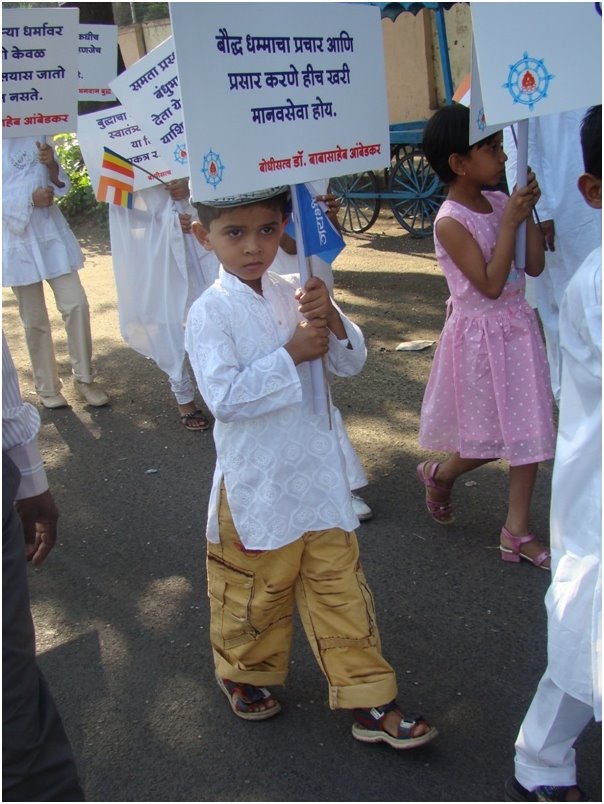
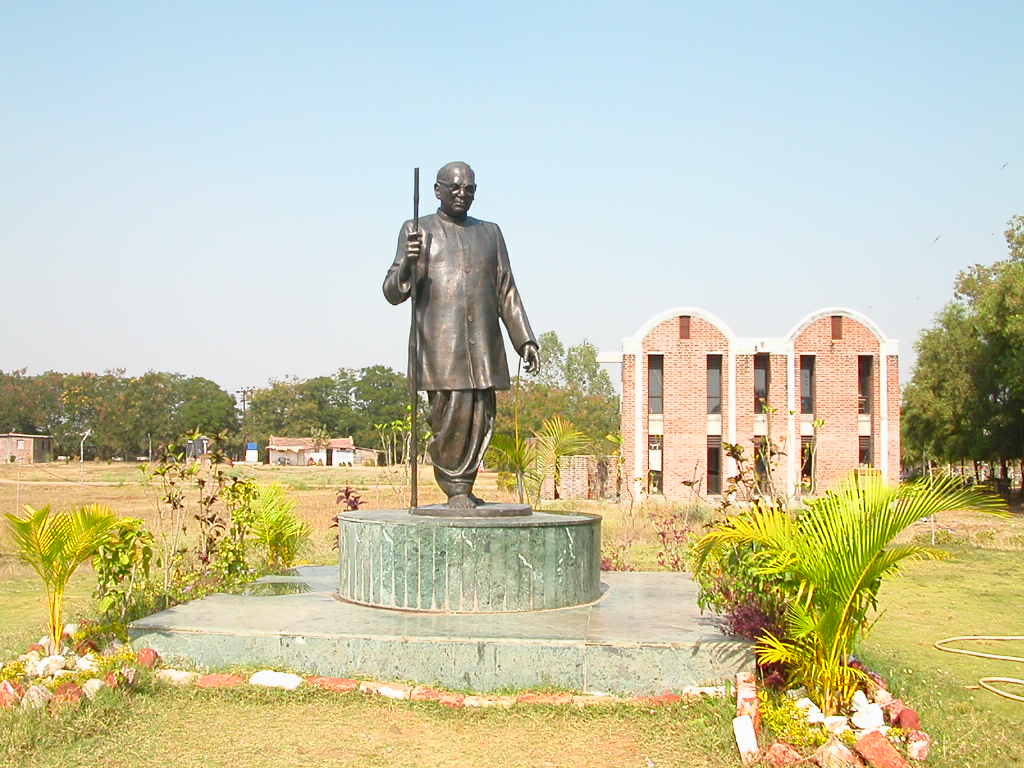
"Recently we celebrated with them Dr. Ambedkar's birthday. On 14 April at around 7.30 in the morning nearly a hundred children and the same number of parents, mitras and order members gathered at the Dikshabhoomi (the 'Ground of Conversion') in Nagpur to pay homage to Dr. Babasaheb Ambedkar and celebrate his 118th Birth Anniversary in a fitting style. At the beginning we chanted the refuges and precepts in front of Dr. Ambedkar’s statue and then walked nearly two kilometres around the Dikshabhoomi. It was a peace march, children and parents were holding flags on which were written Dr. Ambedkar's thoughts.

"We ended a programme with a song about Babasaheb by one of the members of the Little Buddha Children Club and then Ritayus spoke about Dr. Ambedkar's life followed by Mrs. Shubhangi Wanik.

"Nagaketu conducted the programme and at the end gave information about forthcoming Little Buddha Programmes, we ended with some snakes [possible typo here - though maybe not? - who knows? - ed] and ice cream".

FWBO News wishes them well.

Labels: , , ,

Saturday, May 02, 2009

Lokamitra on India: two articles and a photographic archive

We conclude this week's series of stories on India with some photographs from the early days of TBMSG, as the FWBO is known in India. For the curious, TBMSG stands for 'Trailokya Bauddha Mahasangha Sahayaka Gana", the "Friends of the Great Buddhist Sangha of the Triple World".

These are part of Lokamitra's archive and have been added to the FWBO Photos collection on Flickr, which now hosts over 3,800 photographs from all over the FWBO and TBMSG.

Click here to play a slideshow of the images.

To complement the slides we have posted two articles by Lokamitra, one describing his first experiences of India and one looking back after 30 years of work helping to create TBMSG.

Click here to read The Day that Changed my Life

And here for 30 Years in India.

Both are moving testimonies of the situation in India and the amount that has been achieved through people working together, inspired by a common vision.
 
For further reading, we recommend 'Jai Bhim', Nagabodhi's book-length account of the revival of Buddhism in India and the part Sangharakshita, Lokamitra, and many others played in it. It's now available on-line on Sangharakshita's website at www.sangharakshita.org/bookshelf/jaibhim.pdf.

Labels: , , ,

Wednesday, April 29, 2009

Retreat in Tamil Nadu, South India

Continuing this week's theme of stories from FWBO and TBMSG events in India, today we report on a recent TBMSG retreat in Tamil Nadu, South India - which is seeing a revival of Buddhism led in part by graduates from Nagarjuna Training Institute, TBMSG's training centre in Nagpur. They say -

"Namo Buddha. We are graduates of NTI in Nagpur. We are happy to inform you recently we arranged a three days retreat in Pallavoyal village, 70 kms from Chennai in Tamil Nadu. NTI has trained over 500 people from over 18 states in India.

"This was the first of its kind retreat in Tamil Nadu, it brought together Ambedkarites from various districts of Tamil Nadu, well wishers from Sri Lanka including Dhammachari Jinasena, and others including Dhammachari Viradhamma of the San Francisco Buddhist Centre. The ex-students of Nagarjuna Training Institute (NTI) constituted the core of the retreat organisation, arrangement and co-ordination. Over 120 men and women participated in this retreat.
 
"The major components of the retreat were Group Meditation, Dhamma Talks, Buddhist Formalities, Chanting Buddhist songs, Group Discussions and Buddhist Cultural Activities, it was a great help to revive Dhamma in the South India.

"In the beginning of the retreat, a small meeting was arranged between Buddhists from Sri Lanka and people in Tamil Nadu to clear misperceptions about current ethnic conflict in Sri Lanka. Media and hardliners across the strait are trying to fuel enmity on religious lines and propaganda is trying to show that Buddhists in Sri Lanka are pro-war and are party to present war in Sri Lanka. This propaganda is creating negative impression of Buddhism in Sri Lanka, and the people inclined towards Buddhism in Tamil Nadu, mostly the followers of Babasaheb Ambedkar, get confused about role and involvement of Buddhism. However, Sri Lankan delegates made it clear that majority of the Buddhist monks and laities do not support the war and they are extending the humanitarian help to the people affected by war in North Sri Lanka.

"The theme of the retreat was why Babasaheb Dr. B. R. Ambedkar chose Buddhism, and his key points regarding Buddhism. Dh. Lokamitra gave two talks, which were followed by discussions in the small group. Dh. Lokamitra also introduced two meditation practices.

"Tamil Nadu is a new situation for Buddhism, though it has the 100 year history of revival of Buddhism initiated by Pandit Iyothee Thass, who hailed from the untouchable castes, and saw in Buddhism the potential to end caste system. There is an overwhelming response to the teachings and people are keen to explore Buddhism.

"The images of the Buddha are found all over Tamil Nadu. The images are very beautiful and of artistic excellence. At one place, the famous image of Manimekalai, the famous Buddhist nun in Tamil literature, was also found.

"In all, Tamil Nadu like most of the states of India is having huge potential for revival of Buddhism and this retreat is one of the initiatives, there is so much still remains to be done to make Buddhist teachings available to millions of people here. The members of the Sakya Hostels took tremendous pains to make this event a great success.

"Thanking you, with all our metta. Dhammamitra S. Jayasridhar, Visuddhalok, Tamil Nadu".

The photograph shows Lokamitra, who led the retreat, with some of the participants from Sri Lanka.  Tomorrow we report on developments in ATMT, the women's Dhamma and Social project in India.

Labels: , , , ,

Tuesday, April 28, 2009

Fire in India: Jeevak social work building badly damaged

Karunadipa, Director of Jeevak, TBMSG's woman's social project in Dapodi, India, has sent us this report -

"For twenty years I have been working for Jeevak - we are a team of women doing social and educational work in the slums of Pune. We serve the needs of 200,000 women and their families, providing basic healthcare, life-skills training, legal support and a thriving micro-credit scheme.

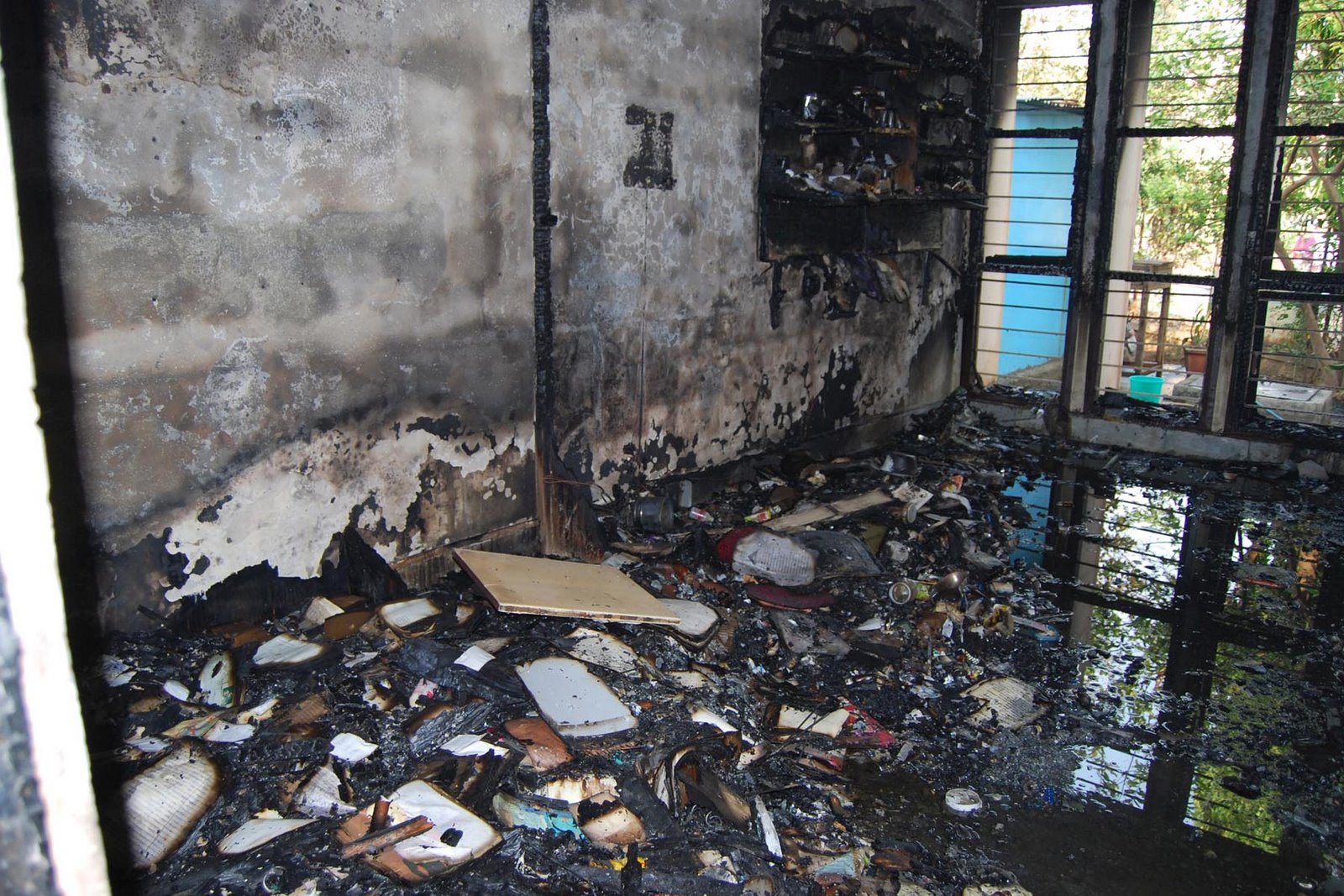
"By now you must have heard that fire broke out last month in Jeevak building and the medical and creche in Jeevak has been burnt down because of a short circuit, especially the medical project has been completely destroyed, 5 fire brigade came for help.

"We are fortunate that the whole building did not catch fire or else it would have been a great loss. The fire broke out in the early hours in the morning about 4am on 16th March, since then we have been very busy clearing up the burnt heap. The ground floor looks terrible hence the medical unit has been closed down.

"WE NEED HELP to set up the ground floor for painting, fixing new doors, windows, grills, complete new wiring, electrification etc, which will cost at least 5 lac (about UK £7,000) for renovation of the building, it will be good if you will be able to give this news in the FWBO news letter.

We have a fundraising page at www.justgiving.com/karunadipa.

Thank you."

"With Metta Karunadeepa"

Labels: , , , ,

Monday, April 13, 2009

Naming the ‘Three Jewels Centre’ in Bodhgaya

Nissoka, a British Order Member who has for many years worked to develop the FWBO/TBMSG’s activities in Bodh Gaya, sends us this report -

“Last month was an historic moment in the growth of our movement, and a historic moment for our team working on the project in Bodhgaya. 500 Order Members came together for our first International Convention in India, and it was held on our land in Bodhgaya. This was followed by a Dhammakranti retreat for 300 friends, mitras and order members.

“Bhante, despite his strong love of India, couldn’t come physically but he graced the event in style by sending us a video, in the middle of which he revealed his new name for our land and work there. With an impish touch of humour, he recorded the video, and had it sent to the Convention, with strict instructions not to let anyone see it until the day of its launch.

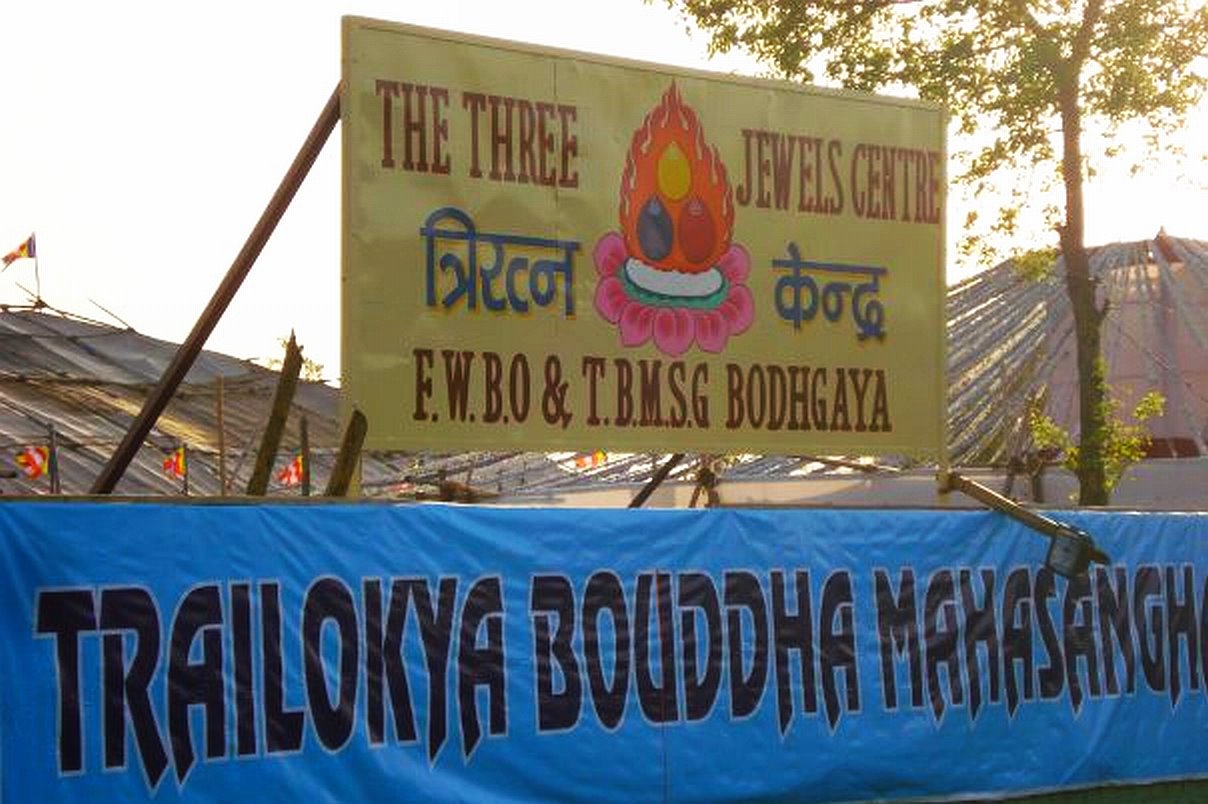
“So it was with great joy and a sense of going into the unknown, we sat inside a big Marquee watching him on a big screen. It’s great how technology can bring him to an event without him coming! I definitely felt his presence was there. When he released the name at the end I just felt waves of delight, devotion and love towards him for giving such a simple yet true name........The Three Jewels Centre!!

“There was not one person in our community who didn’t have a big wide eyed smile as we celebrated – it was like we’d won the world cup or something ! !

“At the heart of life at the Three Jewels Centre MUST be a living spiritual community, who live in accordance with and represent our ideals. With a strong community we can connect with others who come here to meet the Buddha.

“The Sangha must live in Bodhgaya. We don’t need fancy buildings, which can be just empty symbolic follies, token shrines and market places: we need the real community of Sangha. We need to represent our part of the Buddhist Tradition, helping all visitors and Sangha members to connect with its true significance. Faith arises upon seeing the Buddha, seeing the Buddha in his fullness, and what he taught. You cannot have faith in the Buddha if when you come here you are met by heartless big temples that have no living Communities. It is within the Sangha and the Dhamma that the Buddha comes alive, it is with those communities that his vision is realized and communicated.

“It is our responsibility as Buddhists in the 21st century to take up this flame. To live in Bodhgaya as Sangha. To serve all those who come to Bodhgaya looking for the Buddha. So many people make an effort to come, whether they are beginners who come for the first time, or veteran practitioners with new and deeper questions. We must speak up for the Buddha’s vision, like Protectors of the faith. The flame cannot die in our hands. We must work hard to keep the Buddha’s victory alive at Bodhgaya, keep engaged in inward and outward activity.

“All three Jewels must burn bright on our land. Those who visit must meet the Sangha... hear the Dharma… and meet the Buddha.

“The Three Jewels Symbol and name is statement of our intent. It feels so very appropriate that this simple yet deeply significant symbol blazes at our gate. It is a sign that our land is to become ablaze with all the depth and breadth of our great movement.

“May all beings be touched by the peace of the great Bo tree. Nissoka”

The Bodh Gaya team have been developing a more detailed vision for the land, and have just launched this together with an appeal for funds. You’ll find both at www.justgiving.com/bodhgayaproject .

Labels: , ,

Friday, February 27, 2009

Sangharakshita interview premiered at Order Convention in India

Sangharakshita in interview at MadhyamalokaA significant part of the International Order Convention in Bodh Gaya has been a full-length interview with Sangharakshita, founder of the FWBO and Western Buddhist Order.

Now aged 84, he’s not there himself – the video was recorded a month or so ago in Birmingham, UK, and has been prepared for viewing by the FWBO’s ClearVision film crew.

It’s been kept under tight security until now, mostly because in it he ‘reveals’ the new name for the combined FWBO/TBMSG Centre at Bodh Gaya – which is now ‘coming to life’ after an extended period of planning and preparation.

Now the interview’s been shown in India, it’s been uploaded by ClearVision website for all to see - in fact Bhante specifically requested it be shown more widely than just the Convention.

The link is www.motionbox.com/videos/309cdcb31012e2c4be.
NOTE: APOLOGIES BUT THIS LINK IS NO LONGER VALIDE DUE TO THE HIGH NUMBERS OF PEOPLE WANTING TO WATCH THE VIDEO!  WE'LL REPLACE IT WITH A NEW LINK AS SOON AS WE CAN.  FWBO NEWS APOLOGISES FOR THE INCONVENIENCE.

However - there's a second recent interview with Bhante, speaking specifically about Bodh Gaya, available here - http://www.motionbox.com/videos/309bdcb6191ee7c6be

The Western Buddhist Order’s biannual International Order Convention is taking place at Bodh Gaya from Feb 23rd - March 1st, and is the first ever International Order Convention held outside of UK. Attending are more than 160 Order Members from outside India and about 300 living in India (mostly Indian of course, but some Westerners too). The event is being held on our own land on the outskirts of the town, though of course those present are spending plenty of time meditating and doing puja close to the Bodhi Tree.

In the interview, Sangharakshita addresses topics such as the significance of gathering at Bodh Gaya, his own decision not to attend, reflections on “The Essential Sangharakshita” (a very substantial compendium of his writing, recently released by Wisdom Publications), his thoughts on his ‘legacy’, and his comments on an oft-quoted remark he is supposed to have made, to the effect that members of the Order “can change everything except the Going for Refuge”.

There’s also Sangharakshita’s reflections on meditation, on insight, on inspiration, and on the part our Movement has played in the revival of Buddhism in India. Last but by no means least, there’s his announcement of the new name for our Centre at Bodh Gaya…

We'll post a report and photos on the Order Convention on Sunday.

Labels: , , , ,

Tuesday, October 07, 2008

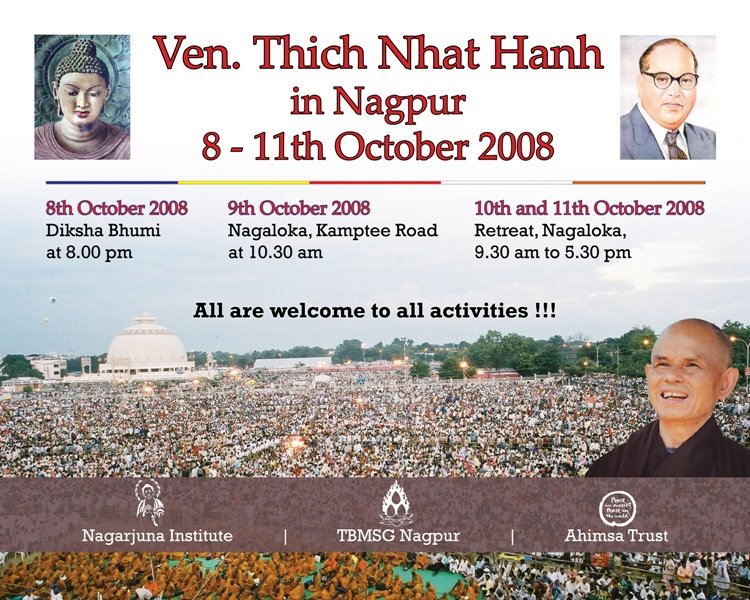
Thich Nhat Hanh in Nagpur, at Nagaloka

Order Members and mitras in Nagpur, India, are busy organising a major visit to Nagpur by Thich Nhat Hanh. The visit coincides with the anniversary of Dr. Ambedkar’s conversion to Buddhism, which took place on October 14th in 1956. Up to a million Buddhists converge on the city at this time.

Thich Nhat Hanh will be at the ‘Diksha Bhumi’, or ‘Ground of Conversion’ on October 8th, followed by an appearance on 9th as Guest Speaker at Nagaloka’s annual anniversary programme, followed by a two-day retreat, also at Nagaloka, on 10-11th October. He will be accompanied by up to 40 monks and nuns from Plum Village in France.

Nagaloka says “All are invited for the retreat” – as well as for the public events of course. More details are available on the Events page of their new website www.nagaloka.org.

Labels: , ,

Monday, August 04, 2008

New video released: TBMSG in India

Recurring Dream’ is the third in a five-part series of films by Suryaprabha, a Order Member who's also a veteran film-maker and chronicler of the Friends of the Western Buddhist Order (FWBO) and its Indian counterpart the Trailokya Bauddha Mahasangha (TBMSG). He’s best–known for the much-loved four-part series on the FWBO’s history: this just-released film is part III of his latest and current project ‘Earth Rising, Heaven Descending’.

The five-part series of films is subtitled “on a search for a spiritually meaningful way of life” and in each film Suryaprabha captures the conversations, images, dreams, reflections, laughter, contradictions and craziness in the people that make up the FWBO/TBMSG Sangha in one or another part of the world. Part I set the scene, part II looked at America.

Part III, Recurring Dream takes him to India, and it’s great! If you’ve never been to India, it’ll take you there; if you have, it’ll take you right back there...

India is full of unlikely spectacles, and Recurring Dreams is full of them. Where else would a brass band accompany someone as they walked down the road to deliver a talk? Where else would you find a stadium full of people ritually dissolving the five elements in their bodies to leave only space? And where else could you see the grainy 50-year-old footage of Dr. Ambedkar as he led 300,000 of his followers away from Hinduism and to a new life as Buddhists?

In its 65 minutes Suryaprabha manages to pack in a great deal of serious and often very intimate content– we witness the hopes and aspirations of young orphans growing up in TBMSG hostels; the frank admissions of women living in a Buddhist community as they discuss between themselves their plans up until marriage (and beyond!); the rousing exhortations of Subhuti as he urges his listeners to initiate a “peaceful revolution”. We glimpse the appalling caste violence that mar the lives of many Dalits in India today, and end with the spectacular extravagance of an inter-caste wedding.

'Recurring Dream' is available from Suryaprabha’s company ‘Lights in the Sky’, the price being £15 for personal viewing and £44 for public showing. Highly recommended.


Click to watch a slideshow of the movie or to visit the Lights in the Sky website.

Contact details:
‘Lights in the Sky’, 72 Holloway Road, London N7 8JG
t: (020) 7607 9480

Review written by Lokabandhu.

Labels: , ,

Tuesday, July 29, 2008

New TBMSG centre opens in Delhi

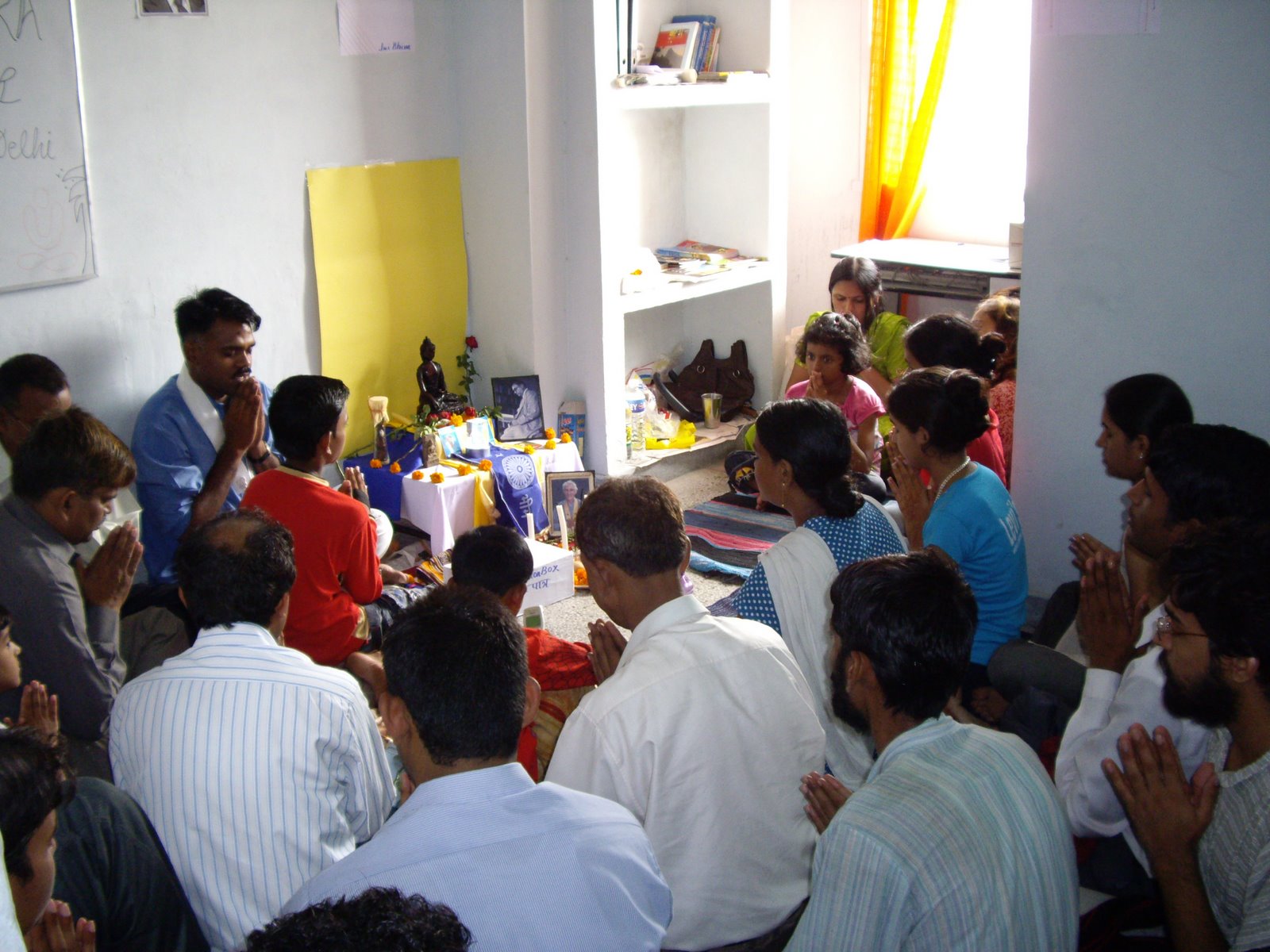
The inauguration of the new Centre premises in Delhi, July 2008
News of India comes today via an FWBO blogger with her ear to the ground in San Francisco - in her journal Jai Bhim International she writes:

"we are rejoicing in the opening of a new FWBO/TBMSG dhamma center in delhi, the dhammachakra buddhist centre.

"the center officially opened last sunday, with an inauguration led by its director, dhammachari maitriveer nagarjuna (shown leading the puja, left).

"over 50 people came to celebrate the new space on the prestigious jnu university campus: university students, buddhists representing other sanghas, as well as families from the local community. may this sangha continue to thrive!"

The new centre will serve as a base for the ambitious plans of TBMSG's Dhammakranti Project for new Dhamma classes in the four neighbouring States of Rajasthan, Hariyana Uttar Pradesh and Punjab, besides serving as a community base and training centre. 

During the opening ceremonies Lama Sumati from Bodhagaya, a long-time friend of Maitriveer Nagarjun, spoke, reminding people about Dr.Ambedkar's teaching that:

1. Buddhism is difficult to practice, so one must be brave to practice the Dhamma.
2. Dr. Ambedkar wanted his followers to be brave to revive the Buddhism.
3. There is no short cut to practice, so we need to work hard for the Buddha's teachings.

The new centre's first major event is already in preparation,  a North India Youth Convention to be held under the auspices of the new National Network of Buddhist Youth - the dates are 11-14 September 2008, in Delhi.

Labels: , , , ,

Saturday, May 10, 2008

In search of a meaningful way of life...


Earth Rising, Heaven Descending’ is the name given by Order Member Suryaprabha to his latest series of five films charting the evolution of the FWBO – and, more generally, of Sangha in the West - over the past 40 years. His ‘Lights in the Sky’ imprint has already given the FWBO some of its evocative images of its’ past, especially through the much-loved ‘History series - or click here for some trailers.

Suryaprabha sees his films as a “search for a meaningful way of life” and, on the eve of the release of the third in the series, he has sent FWBO News this summary of what he's trying to do in the present series. He says –

“THE IDEA was to collect stories from around the world of people who have some connection to the Friends of the Western Buddhist Order and, with some reflection, to come to appreciate this hard to describe ‘spirit’. A five part series has evolved, with Part 5 becoming that original film with four preceding films setting the scene. So the series, after a statement of the ideals and principles goes, in the middle films, fairly deeply into messy worldly existence and (it is predicted) end calmly and contemplatively. People were chosen for variety of lifestyle and environment and only secondarily for their level of ‘practice’. In parts 2 to 4 the social context of their lives is explored, including the balance between personal and public concerns. In the words of Vishvapani, the series maintains a ‘sideways look’ by ‘sitting in’ on conversations rather than employing an ‘authoritarian’ narrator-interviewer approach.

"Part 1 BACKGROUND (42 mins, August ’08 release) recalls an earlier era of the Buddhist transmission to the West when FWBO founder Sangharakshita was befriended and taught in Kalimpong by Indian and Tibetan Buddhist teachers.

Now, three of his disciples undertake a pilgrimage to the Himalayas to connect with their and his spiritual roots.


"Part 2 ONCE FREE (63 mins, now released) is an ironic, tender portrait set in a place (USA) where the ratio of personal persona to public persona is perhaps 9:1. And in a place where bounty or impoverishment are seen as just rewards for an individual’s effort, a handful of Buddhists find ways of ameliorating institutional harshness through work in health, education and prisons: an example of quiet, hopeful lives within a dominant culture.

"Part 3 RECURRING DREAM (64 mins) Set in India, where the ratio of personal persona to public concern is perhaps 1:9. The iconic Dr Ambedkar ensured the Constitution outlawed caste-based discrimination and dreamt of further changes coming through the adoption of Buddhism. 50 years after he and millions of his caste-based followers converted, Hindus still see ‘Old Untouchables’ rather than ‘New Buddhists’. Why? The gains in social welfare and self confidence are indisputable. But prejudice and distrust flare up easily on all sides, amongst even Buddhists. And caste-based marriage, Subhuti argues, ensures the scope of the Dhamma Revolution remains limited. Amongst the many stories, dreams come true at one inter-caste wedding. (June 08 release)

"Part 4 UNTITLED - Set in the middle ground, in societies with a social contract. Here the FWBO is involved in many aspects of mundane life involving a range of folk. But how well can it combine going ‘outwards’ to work with culture / environment / society with the ‘inner’ work on the self? Is it easier or harder to reconcile these given that a cushy life may be spiritually impoverished one?? Stories are set in UK, Finland, Australia, New Zealand, Spain, Catalonia, Ukraine, Germany and France – many filmed in the speakers’ native languages. (Dec. 08 release)

"Part 5 UNTITLED - an open-minded focus, which hopes to capture that elusive quality of 'spiritual communication'. It's not yet been made; watch this space…"

Any of the above, including the original ‘History’ movies, are available from Suryaprabha’s shop in DVD format.


Labels: , , , ,

Thursday, April 17, 2008

Wheels Turning in Sarnath

Each of the pilgrimage places associated with the life of the Buddha has its own atmosphere. Bodh Gaya, where the Buddha gained enlightenment, is a vibrant focus for practice and devotion for Buddhists from around the world; Vultures Peak, the site of many important discourses, remains a remote and beautiful spot; and Sarnath, where he first shared his teaching, has an atmosphere of quiet concentration. Several ancient stupas mark the spots where his former disciples first saw him approaching; where he gave his first discourse; and where he later taught others who had come from the nearby Hindu holy city of Varanasi.

Across the road from the main site and set back a little is land belonging to the FWBO/TBMSG. To date, only a small building has been erected on here, but it hasn’t been unused and plans are afoot to create an international study centre. There’s another, separately administered, plot of land in Bodh Gaya.

On February 3rd Vishvapani gave a talk on the land on ‘The Unity of Buddhism’, which was attended by around fifty people. Most were dalit followers of Dr Ambedkar, tens of thousand of whom became Buddhists in the 1960s. However, there has been little follow-up in the following years, despite the presence of many Buddhist teachers in Sarnath. Two years ago Dhammachari Shantighosha moved from Pune (in the TBMSG heartland, many miles to the south) to look after the land and work with local Buddhists. The people attending Vishvapani’s talk had gathered as a result of Shantighosha’s work, and over the next three days Vishvapani and Kamalagita led a retreat for ten local dhamma-mitras.

Vishvapani reports: ‘I was very impressed by their appreciation of Shantighosha and by their enthusiasm for he Dharma. Asit, one of the mitras on the retreat, collects scrap metal, and whenever he visits a locality he gathers people around and he tells them whatever he has just learned about Dr Ambedkar and Buddhism.’

The retreat came at the end of a pilgrimage in which Vishvapani, Kamalagita, Vidyadaka and Phil Daley were taken around the Buddhist holy places by Manidhamma and his wife, Samantha. Manidhamma has recently returned to India after six years study and training in the UK, and the pilgrimage benefited from his deep knowledge of the Buddha’s life and considerable experience of pilgrimages. He plans to lead many more in the coming years.

Manidhamma is working with Manidhamma is working with the Dhammaloka Trust, which intends to develop the Sarnath study centre. Their ambitious plans include a pilgrim’s guest house, a shrine room and an library and study centre that will host courses and retreats for people around the world. He also hopes to develop contacts between Sarnath’s cosmopolitan Buddhist community and the local Ambedkarite Buddhists.

The project has Sangharakshita’s blessing, but it will depend on donations from outside India. If you would like to learn more about the project or help support it, contact The Dhammaloka Trust.

Text by Vishvapani

Labels: , ,

Thursday, March 06, 2008

Dispatch from Nagpur

FWBO News is happy to present the second dispatch from Saul Deason, a mitra from the FWBO's North London Centre, presently in India for an extended period with two projects teaching English. The first instalment saw him in Delhi with the Amida Trust, this comes from Nagpur and the many TBMSG projects there.

"Arriving by train at Nagpur I hit a seedy hotel mattress and stay on it three days recuperating. This is the lowest point: I begin to think I’ll give up and go home. At that instant things begin to happen. I am visited by two Indian Order Members and re-accommodated at Nagaloka, the out of town Buddhist training centre. I lay on another bed surrounded by a sea of Hindi voices. I venture out at what I think is mealtime and eat incredibly monastic food.

"Reflecting on the finiteness of my energies I start to work. Three days teacher training at Mitraloka, TBMSG’s language school in the city centre, goes well. I start speaking classes for advanced students at Aryaloka, a computer training centre also run by the TBMSG. Finally I start teaching speaking skills for basic level Dhamma trainees at Nagaloka. The enthusiasm of the learners is so great that I find myself forgetting my afflictions and work becomes an antidote to my sickness.

"Countless communication breakdowns at Nagaloka help me map out learner needs for speaking skills. I begin to get a fumbling cognizance of cultural sensitivities. Slowly my teaching strategies begin to become more cogent. In the Aryaloka class – in an all-Buddhist part of town - it goes from strength to strength. We start discussing personal development issues –how to meditate, how to kill fear - only to grind to an apathetic halt when we discuss political issues. At Nagaloka the programme is a more basic one for learners with less English: shopping, booking a rail ticket, describing a friend so somebody can meet them at a station, answering questions at job interviews, talking about qualifications and experience... Things threaten to break down under a vocabulary overload so I switch to carrying out numeracy operations (plus, minus, times, into, equals) with students going up to the board and calculating out loud (so their numeracy improves even if their English doesn’t!) Trying to break down boredom I get the karate experts showing basic blocks, kicks and punches at the front of the classroom. We even get round to doing Black nationalist poetry: “Play it cool and dig all jive”. After class trainees taunt another trainee for liking Kung Fu movies which are hardly non-violent, “I just dig Jackie Chan!” he exclaims. I begin to feel I’m getting somewhere.

"There are features of Hindi discourse that I know I haven’t mastered although I teach the functions of insisting, refusing, expressing failure to understand, requesting clarification. Many Indians were taught in English so they often have considerable passive knowledge of English but they all, basic or advanced, have an enormous need for actual speaking practice. I often meet someone who ploughs through a Sangharakshita text but does not understand elementary English requests and cannot tell when he is being told “No!” It strikes me that the more advanced the student the greater the scope for self delusion!

At dawn I walk towards the meditation shrine into the rising sun. In the evening a motorbike picks me up and takes me into town. We drive into the setting sun. My life is both monastic and worldly. From Amida’s Delhi Project the advice of Sahishnu echoes in my mind, “if you are not careful you’ll end up teaching advanced English to middle class students who can afford tuition anyway.” I turn my back on my classes and do walking and chanting invoking Vajrasattva to cleanse me of egotistical motives. I resolve to check out the classes being taught in the slum districts of Nagpur. I reflect on the prospect of recruiting English teachers and have them stay at Nagaloka before sending them on outreach classes that don’t burn them out as I had done in Delhi. Foreign funding flows into bricks and mortar but not into staffing so we’d have to train locals to help us run the outreach classes. The Ambedkar movement needs new initiatives and younger leaders say my students but how do we do that when we fail to educate the coming generation? I plant my meditation cushion on the shrine room floor and admit to myself that I just don’t know".

You can find a full introduction and background to Nagaloka and many of TBMSG's projects on TBMSG's Jambudvipa website.

Labels: , , ,

Monday, December 31, 2007

FWBO News in 2007 - the best and the rest...

During 2007, FWBO News published a total of 204 news pieces covering a wide range of events across the FWBO and TBMSG (as we’re known in India). On this, the last day of the year, it seemed appropriate to celebrate that – well done us! We also wanted to mention just some of the best stories we never managed to cover over the year. Sometimes these simply didn’t get a mention at all, and sometimes they did, but not the emphasis they deserved. It was a rich year for us in many ways. Read on…!

July saw nine women being ordained at our Hsuan Tsang retreat centre in India, five by Jnanasuri, an Indian woman Dharmacharini. It was reported at the time, but its proper significance hardly drawn out - we believe this marks the first ordination of Indian women by Indian women in India for very many years, possibly the first time ever. Sadhu Jnanasuri!

There are thriving FWBO centres in Mexico, Finland, Australia, New Zealand, and San Francisco – among other places – but we were unable to extract any actual ‘news’ from any of them. Perhaps we’ll be more lucky in 2008! Likewise our smaller centres in Estonia and Norway. We’d have included FWBO Poland as well, but we now have a report from them that’s planned to be the first or second news pieces of the new year. Watch this space! And check our links page for all their websites.

As well as running our city centres and retreat centres, the 1,500 members of the Western Buddhist Order are active in a great many different fields. Most, if not all, have chosen livelihoods that directly express their ideals in one way or another. We’d have liked to present more features on Order Members doing prison work, also those working with NVC (non-violent communication), mediation, and the very successful carers’ retreats, plus recent developments in the areas of meditation and chronic pain, depression, addiction, and relapse prevention. Also, a number of Order Members are on, or are preparing to undertake, long retreats – and a far larger number are getting married and having children. Both very fertile areas for Dharma practice, of course! Perhaps related to the latter is a renewed interest in community living, but specifically in exploring new patterns to the traditional FWBO single-sex community. Ty Brethyn in Wales, a family community founded by Order Members from Buddhafield North, is the first to actually come into existence, but several others are on the drawing board – the most advanced probably being the Bodhi Eco-Project in Scotland.

2007 also saw the first major survey of the Order for many years, something which illustrated very graphically the increasing diversity of the Order. Results are still being digested, but we hope to present some of them here in due course. Among many other things the survey showed the continued move away from communal living and cooperative working, which were both such a feature of the early FWBO. Indeed, the survey estimated that today only some 20% of the Order are employed by FWBO institutions and only about 30% living in FWBO communities. Both Windhorse Publications and Windhorse:Evolution have undergone major changes over the past year, we’d have liked to tell you more about these too. Happily, the Order as a whole continues to grow almost exponentially, with some 1,500 members and well over 1,000 men and women preparing for ordination in many countries.

Sangharakshita, founder of the FWBO, also seemed underrepresented during the year, although he was mentioned in six stories. 2007 was his most active year for some years, and sadly we were unable to report on many of his travels – for instance, his first visit to the Buddhafield Festival.

Looking ahead to 2008, high on the list must be the FWBO’s International Retreat, to be held at Taraloka in late May. Check the latest details or in other languages. We’re also developing plans for a ‘virtual buddhist centre’, an on-line version of what you’d hope to find at a ‘real’ Buddhist centre. In fact, we’d like to hear from people who’d be interested in helping us develop this – please email us if you’re interested. Readership of FWBO News also seemed to go up and up, though there’s still plenty of people across the F/WBO who don’t read it regularly. Spread the word! In the past two months it has attracted visitors from 77 countries – welcome to you all.

And finally - best wishes for the New Year, may it be happy and peaceful for you all.

Labels: ,

Thursday, July 12, 2007

Jambudvipa team visits America

Jambudvipa is an FWBO/TBMSG project based in Pune, India, which - among other things - aims to internationalise the plight of India's vast ex-untouchable 'Dalit' community, from which come most of India's new Buddhists. Besides this they play a crucial role in disaster relief work with this community (see for example the report on their work after the Tsunami) - at such times India's age-old caste system rears its head with full force.

Mangesh Dahiwale, Jambudvipa's publicity officer, recently sent us this report on their recent - and ground-breaking - trip to the USA:

"As a part of Jambudvipa's vision to reach out to the world community and transcend barriers, and to generate international support for peaceful social revolution that Dr. Ambedkar launched, a visit to US was planned.

"Maitreyanath and Mangesh Dahiwale visited US during April 19-May 28, 2007. In the span of over 35 days, they moved from one city to another to give talks on evils of caste system in India, Dr. Ambedkar, revival of Buddhism in India and work of TBMSG. This visit was aimed at dissemination of information, raise support for the revival of Buddhism in India and develop alliances.

"During this visit, people from all different background co-operated, which included followers of Dr. Ambedkar living in US, social activists, academicians, black activists and Order Members of FWBO/TBMSG."

In the short time they were there they managed to meet a remarkable range of individuals and groups - from Tricycle Buddhist magazine and the Buddhist Peace Fellowship to the US State Department and five different universities and colleges, plus of course several FWBO centres, criss-crossing the country beween San Francisco, Los Angeles, New York, Cincinnati, San Diego, Washington, Indianapolis and elsewhere.

There are encouraging signs that caste prejudice and discrimination is increasingly being seen internationally not simply as an Indian social issue but a gross violation of human rights - see, for instance, recent references to this both in the UK's House of Commons and House of Lords where the UK Government minister is quoted as saying "My Lords, I agree with the noble Lord and with the Prime Minister of India —[Untouchability] is indeed a blot on humanity. Discrimination on the basis of caste identity constrains the human rights, livelihoods and life chances of millions of men, women and children. It is a systematic injustice and a routine violation of the most basic human rights..."

We are proud that the FWBO and TBMSG is able to play a part in making this more widely known and indeed in eradicating it.

Labels: , , , , ,

Thursday, July 05, 2007

Vimalasara and her forthcoming book Broken Voices

Vimalasara has sent us this report and request for help. We're pleased to pass it on in case there's anyone out there...

She says "Earlier this year I was in India for four months, writing a book on the situation of Dalit women for the FWBO/TBMSG’s ‘Arya Tara Mahila Trust’ - a Buddhist organization working for the empowerment of Dalit women. Initially we’d thought ATMT would try to raise the money to publish it, but after doing the research and writing it up, I felt strongly the book was so important it deserved to be published by an established publisher. Hence my hunt began for the publication of 'Broken Voices - Ex-Untouchable Women Speak Out’.

"Of course I went to Windhorse first as everyone in the Sangha seemed to think they were the appropriate publisher, but alas they are focusing on purely Buddhist books, and felt unable to market the book. I then tried some mainstream publishers, and the following is typical of the letters I got back,

`Dear Valerie,
We discussed your proposal at our editorial meeting on Wednesday and my colleagues were very impressed both by the depth of your research into the normally overlooked lives of ex-Untouchable women in India and by the strength of these stories. This is a really important topic and it's wonderful that people outside the immediate community are beginning to examine these women's lives. But although it's interesting and worthwhile I'm concerned about how we could publish it effectively here. I agree that there is a growing awareness of the Dalit experience and very much admire your attempt to let the women whom you have interviewed speak in their own voice as far as possible but I am concerned that the audience for a general book of this kind would be very limited and with regret we have decided to pass. I'm sorry and wish you every success on publication elsewhere.’

"Four publishers said almost the same thing, so what to do? We tried the FWBO Growth Fund who felt that Windhorse were the people we should be approaching, and some even felt a charity like Karuna should be the ones to publish. But they too were unable to help us. So we are back to square one. The book is with a couple of publishers in India- but if they go ahead this will only be for India, and so we still need to raise the money to publish in the UK.

"This is where self-publishing is a brilliant resource but of course we still need the funds to do this. Everyone who has worked on the manuscript has done it for nothing – which has been an inspiration – and Bhante Sangharakshita has also read it, and agreed to give his endorsement.

"So I’m trying to find away to finance the actual printing of the book, then ways of distributing it. I have some big news which I’m unable to announce till December and therefore in terms of a media campaign that would be a great time to bring the book out."

Please contact her if you think you can help at vimalasara [at] gmail.com

Labels: , ,