Thursday, February 28, 2008

Taking Buddhism to the Himalayas?

Munisha reports from Bhutan...

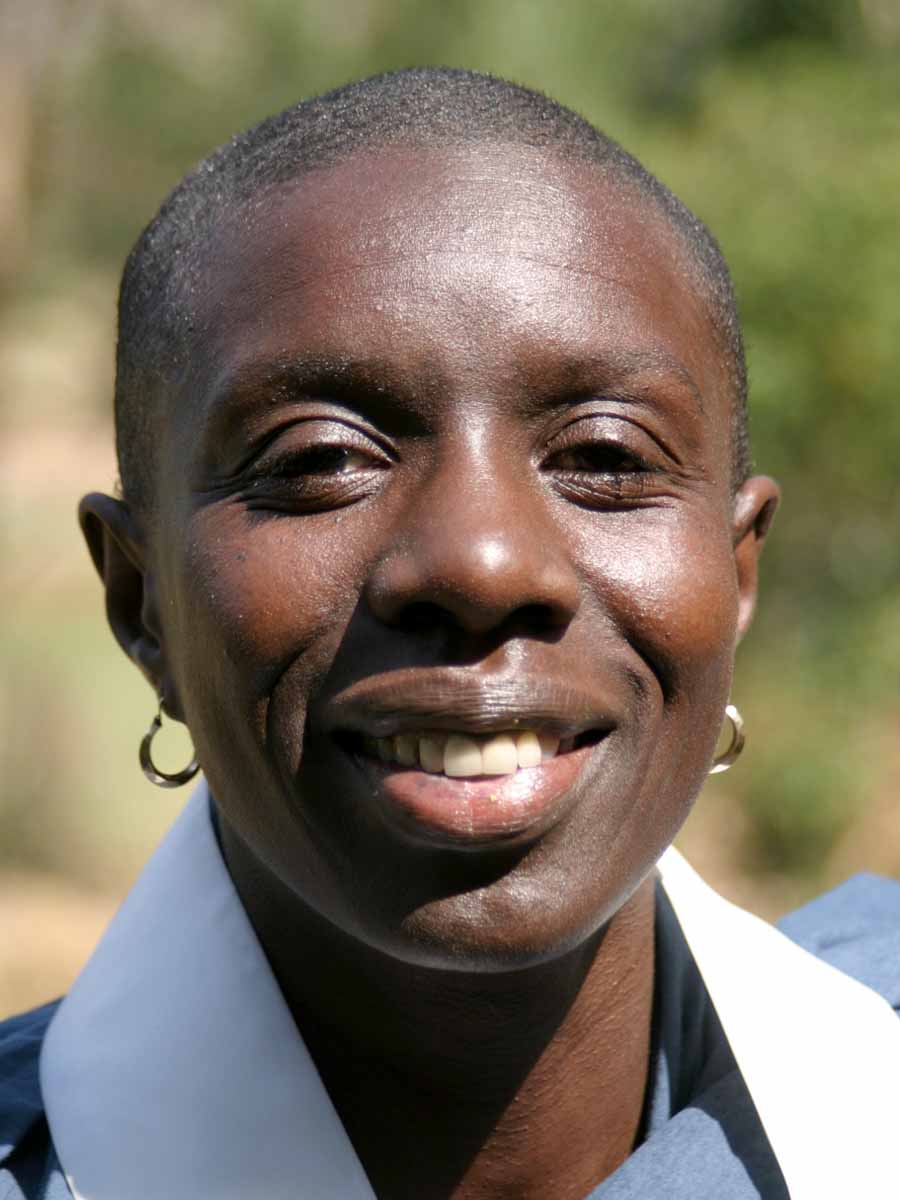
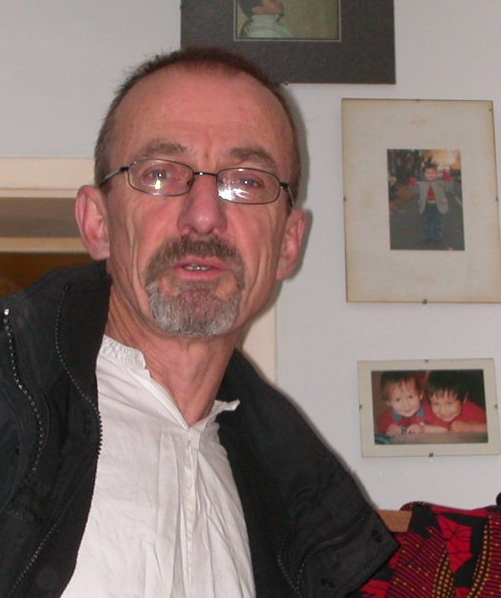
Last August I spent a very interesting three weeks in Bhutan. As the education officer at The Clear Vision Trust, I'd been asked by the Bhutanese Ministry of Education to come and put the finishing touches to their draft Framework for Values Education - which overlaps with the curriculum areas known in the UK as Religious Education, Social, Moral, Spiritual and Cultural Education, and Citizenship Education. I asked Joyce Miller to accompany me; she's a Theravadin laywoman and recently retired Bradford (UK) Local Education Authority officer for Diversity and Social Cohesion.

Bhutan straddles the eastern Himalaya. It's about the size of Switzerland, with a population of 600,000 mostly subsistence farmers, mostly Buddhists. Sandwiched between two superpowers, China and India, its survival as a sovereign nation relies on the maintenance of its distinctive culture, traditions and landscape, whilst meeting modern, global culture. Bhutanese are among the millions who have jumped straight from no phone to mobile phone; from almost no TV to cable. They're also moving from 100 years of absolute monarchy to a constitutional monarchy: March 2008 sees Bhutan's first elections.

Perhaps the most valuable thing Bhutan has given the world is the concept of Gross National Happiness (GNH): the notion that the true wealth of a nation is to be measured not by its industrial and commercial output but by the all-round wellbeing of its people. All public policy is formed with GNH in mind, and education is part of this.

Our visit began with a presentation demonstrating our understanding of Values Education, and something of Bhutan's present spiritual and political culture. With the vice chancellor of the new university as Chair the officials sat in rank order down a long table. All in national dress, as he entered they bowed in turn, stroking the backs of their fingers across the floor towards their feet. During the discussion following our presentation, we noticed they contributed also in rank order. They'd specifically requested a PowerPoint presentation, which unfortunately became a PowerCut presentation. I won't forget their insistence on hearing some of the new Clear Vision CD of meditations for young people: the entire room in silence, most of them probably meditating for the first time, led by the voice of a female western Buddhist - me!
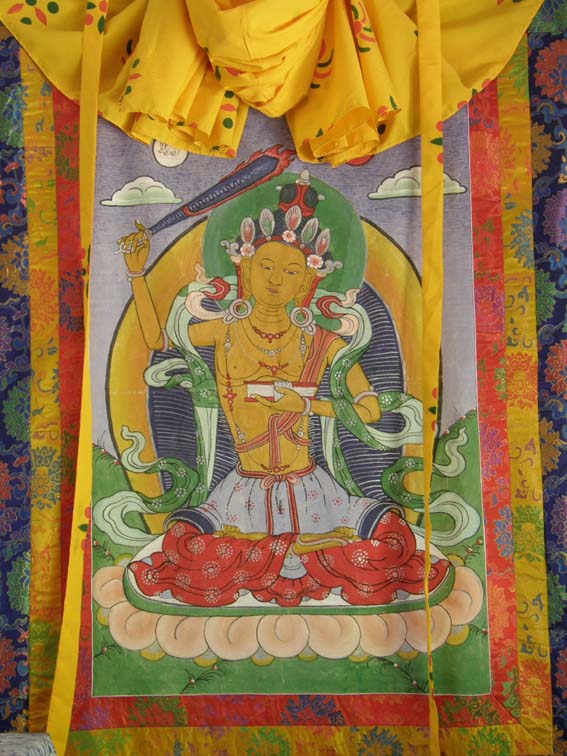
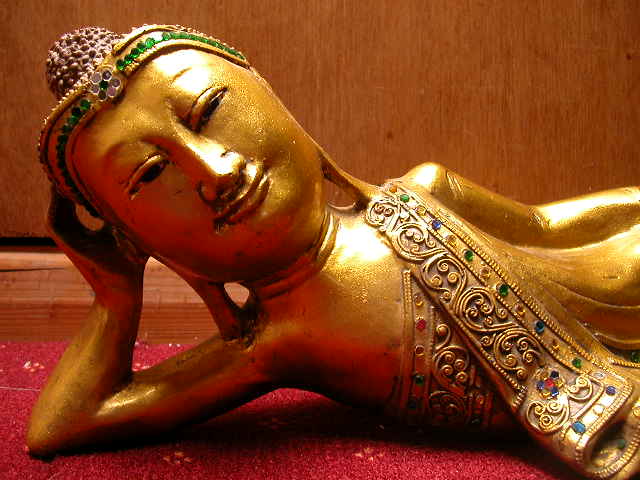
After that there were four fascinating days of visits to schools and teacher trainers, assessing the current teaching of Values. And further meetings, and work on the Framework - except that they kept taking us out sightseeing in office hours, so that eventually there were just four days for our work on knocking the Framework into shape, drawing up tables of exactly what values could be taught through what themes and activities, across all the years of school; all without explicitly mentioning Buddhism. The school system is secular (even if every day begins with lengthy whole-school prayers to Jampelyang, God of Wisdom - aka Manjushri - see photo) and up to 20% of Bhutanese are Hindu.

So, why did the government of a more than thousand year-old Buddhist culture consult a pair of British convert Buddhists? The Bhutanese educationalists we met love the Dharma and are exasperated at the lack of Dharma teaching for laypeople. Many of these educationalists are highly educated at western universities; one said he had learned all his Dharma from an Eastern Religions course at a Canadian university. Many are reading western Dharma books. We heard of school teachers sent abroad on Goenka retreats, much to the annoyance of Bhutanese monastics. “Well!”, commented the vice-chancellor - "What are THEY doing?"

I saw in senior educationalists a desire to introduce young people to what I'd call a “useable Buddhism”. Most Bhutanese lay Buddhists never learn to meditate or study even basic teachings, because Himalayan Buddhism is esoteric and traditionally the preserve of monastics, whom laypeople support out of a respect for tradition. But across Asia (and among British Asian Buddhists) many young people are no longer inspired by tradition. They want to be modern, western. If they become interested in Buddhism, it will be because someone teaches it from scratch, as we would do in the Religious Education classroom, with teaching materials such as Clear Vision's, and they find it makes sense.

Our hosts were keen to invite us back to train the country's headteachers in the new syllabus, which is planned to start in January 2009. However, the elections mean that the country's tiny civil service is entirely preoccupied with voter education. Add to this the coronation of the new king in May and I doubt we'll be hearing from them for some time!

Labels: , ,

Tuesday, February 26, 2008

'Broken Voices' book launch in India

Vimalasara, an African British Order Member, is currently on tour in India, launching her new book on the stories of Indian ‘Dalit’ women. The title, ‘Broken Voices: 'Untouchable' Women Speak Out’, speaks for itself, the book presenting a series of moving stories gathered by Vimalasara on an extended visit to India in 2007. Click here to order it on Amazon.

The book is presently being launched in Mumbai, Delhi, Kolkata, Pune, and Nagpur, and in most places the evening will include panel debates on the theme of “Caste - Does it still Exist?” Click here for more details of her itinerary – all are welcome to attend.

Another book with equally moving stories has recently been published, this time by Baby Kamble, a Dalit woman, whose writings were accidentally discovered by American sociologist Maxine Berntsen. Her book is titled "The Prisons We Broke", and you can read a moving interview with her here - beginning with the chilling words “I hid everything I wrote for 20 years”. She goes on to acknowledge her debt to Ambedkar - 'Dr Ambedkar had said, “You believed in god. You gave away generations to him. Now give me a chance. Give me this generation! Make sacrifices for 20 years. Enroll your children in schools. Go hungry if you must! But educate your children. After twenty years, you yourselves will come and tell me what is better— god or education?' These words of Dr Babasaheb Ambedkar touched the hearts of our women".

It is the first autobiography by a Dalit woman in Marathi, probably even the first of its kind in any Indian language. The book itself can be ordered here.

After her Indian tour, Vimalasara will be heading for San Francisco to take part in a pioneering conference organised by the FWBO’s San Francisco Buddhist Center. The conference is ‘Buddhism: Beyond Race and Caste’ and will be held on April 26th, click here for more details.

Labels: , ,

Saturday, February 23, 2008

New article on FWBO News Features – Kamalashila on community

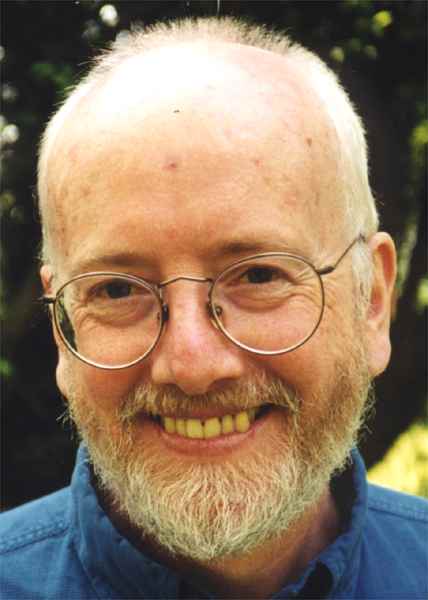
Following on from Akasati's article on Climate Change, “Community, Nature and Buddha Nature” is a new and thought-provoking article on the Features section of FWBO News. It's by Kamalashila, and looks at possible – and necessary - new patterns and paradigms for Buddhist communities in the light of insights gained during his 18-month-long solitary retreat at Tipi Valley in Wales.

It is also a call for people to come forwards and join him in establishing a new, large, ecological, practice-based Buddhist community in the West of England that would be large enough and spacious enough to include a wide diversity of practitioners – men and women, celibates and couples, children and elders, mechanics and musicians…

Kamalashila is currently on a four-month retreat at Guhyapati's mountain retreat centre in Spain, but is returning in March. You can contact him via FWBO News, who will be pleased to forward messages to him for his return.

Labels: , , ,

Friday, February 22, 2008

Free Buddhist Audio News – Launch of New Version!

Free Buddhist AudioWelcome to the news from Free Buddhist Audio,
the free download, podcast and streaming service from the Dharmachakra audio and text archives. To receive more regular updates on the site, you can always subscribe to our own blog.

Well, we've been absent from the FWBO newsblog for a while but it's great to be back. And we're absolutely delighted to be able to announce here the launch of Free Buddhist Audio – Mark II!

Since the service first began in December 2006, we've been listening to feedback on the site, dreaming up ways to improve it, and working away behind the scenes to bring you a whole host of new features. Today is just the start of a planned cycle of improvements you should see happening throughout the next year, but there's lots to tell you about right now...

The Sparkly Bits

If you're familiar with the site, you'll notice we've made some changes to the menu structure, introducing three new sections:

series      community
      study

These kind of speak for themselves! Come and play... We'll be building on these foundations a lot in the next few months. Here are some highlights of what's in store:

  • Search and download whole series of talks at once!

  • Re-developed 'local' section for talks uploaded by FWBO communities all across the world

  • Social bookmarking (sharing) added throughout the site – tell your friends about your favourite talks with one click!

  • New social network presences on MySpace, Facebook and Second Life

  • Hosting of study materials for the new FWBO Dharma study course for Mitras, including content produced for use by people with restricted vision

  • Under The Hood

    The changes aren't all glossy! We've also done some real engine work. Search engine, that is...

    You'll notice, for instance, a re-designed audio search facility. Results come faster – and they're a lot prettier to look at.

    And did we mention the beautiful, mysterious 'Rainbow Coloured Tag Cloud'?

    We're also very happy to let users of our text service know that we've completely re-written the search facility for this too!

    The new engine is fast, and extremely precise. There are lots of fancy options for those who need them. And we've integrated all the material too: so now you can search – and read online – all 17.5 million words by Sangharakshita and the many other members of the Order whose transcripts we are steadily gathering together. Give it a spin...

    Into The Future

    You'll find lots of other nice little tweaks and features around the new site. We hope in the next while you'll enjoy getting to know us all over again...

    Keep an eye out for more news here in the months ahead – and watch for imminent transformations as we spring clean any and all dusty corners (hint: meditation)...

    And if your Centre would like to know more about how to upload talks to your own special pages on our site, please get in touch!

    Thursday, February 21, 2008

    FWBO News ranked no.2 Buddhist blog

    FWBO News has been ranked second in the Buddhism section of Blogged.com’s worldwide catalogue of blogs – and a respectable 18 out of 4,153 in the overall ‘spirituality’ group. According to Blogged, “we evaluated your blog based on the following criteria: Frequency of Updates, Relevance of Content, Site Design, and Writing Style. After carefully reviewing each of these criteria, your site was given its 8.7 score, “Great”. Please accept our congratulations on a blog well-done!!”

    Labels: ,

    Wednesday, February 20, 2008

    FWBO International Retreat update

    Here's a short update on arrangements for the upcoming FWBO International Retreat - May 22-26th, at Taraloka, in Shropshire, UK. Vajragupta, the main organiser, has sent FWBO News this report -

    "The bookings for the FWBO International Retreat are now flowing in. We’ve just booked the local village hall in order to be able to provide more accomodation, and we’ve also heard that one group are going to arrive by barge, and moor it on the canalside near to Taraloka!

    The programme is continuing to come together with talks, groups, workshops, and rituals led by Dhammarati, Kamalasila, Padmavajra, Parami, Maitreyi, Ratnadharini, Ratnaguna, Sona, Vessantara, and Vidyamala - with more to be announced nearer the time…

    Children most welcome!
    There will also be facilities for children and families, and special facilities for those travelling from beyond the UK.

    The event is sure to be an inspiration for someone on his or her first retreat. Likewise, for those who’ve already been on many retreats, this will be a great opportunity to experience the magic of practising together in large numbers and to experience the greater FWBO Sangha.

    Translations and non-UK Visitors
    We’ll be able to provide some simple translation facilities for those who don’t speak English. During the big talks we will have headphones on which people will be able to listen to simultaneous translations in Dutch, German, Spanish, and possibly other European languages (depending on the numbers in each language group).

    Some of the study groups and workshops will also be run in two languages e.g. English and German, or English and Spanish. So, although this means that non-English speakers will have less of a choice of groups and activities to attend, there will always be at least be one group in their language.

    Rituals will mainly be in English, but we will be bearing non-English speakers in mind, and will sometimes have sections in other languages. Hearing the Dharma in many languages during rituals can actually be very inspiring!

    Lastly, we can also offer first priority for dormitory accommodation to those who’ve travelled from abroad, provided they book before 22nd April. If you could book even earlier, this will help us with planning.

    For more details of what’s on offer, please contact your local Centre or check the FWBO International Retreat website.

    Labels: , , , ,

    Tuesday, February 19, 2008

    Day retreat in Guelph, Canada

    For some years Harshaprabha, an Order Member from Ipswich, UK, has been regularly visiting Guelph, in Ontario, Canada, to pursue his dream of establishing an FWBO centre there.

    Harshaprabha has sent this report to FWBO News -

    “I made another visit to Ontario, Canada from 31 January till 7th February. The weather was real winter, with a big snowstorm which brought 300 mm of snow to Toronto and 250 mm to Guelph where I was staying. This was the third time it had snowed in the week I was there – but even though temperatures dropped to minus 16 with the wind-chill factor I never felt the cold there as much as I do in England!

    “I led a day retreat on Sunday 3rd at a Yoga Studio in downtown Guelph. There were 16 of us for the first half of the day, slightly fewer after lunch. I was pleased to see that there were 3 new faces there including a woman who’d come because she met a friend who used to attend the FWBO's Colchester Centre at a conference near Vancouver. She teaches history at the University of Guelph.

    “Duncan, Sue, Kerry and I worked out after the day that we could have had 26 people there if everyone who had an interest in the day and/or the FWBO turned up.

    "The potential for a Sangha in Southern Ontario including Toronto is a real one. If you feel for this and / or would like to support my 7 monthly visits then do get in touch - email me, Harshaprabha. At present I fund it from my wages and savings. It would also be lovely to fund some of the friends to go on FWBO retreats as many have very little money.

    "I keep in touch with my friends there by e-mail and the occasional phone call. Quite a few know each other from AA, therapy groups or Laugher Yoga! We’re a great little Sangha.

    Labels: ,

    Monday, February 18, 2008

    Ty Brethyn - a new type of FWBO community

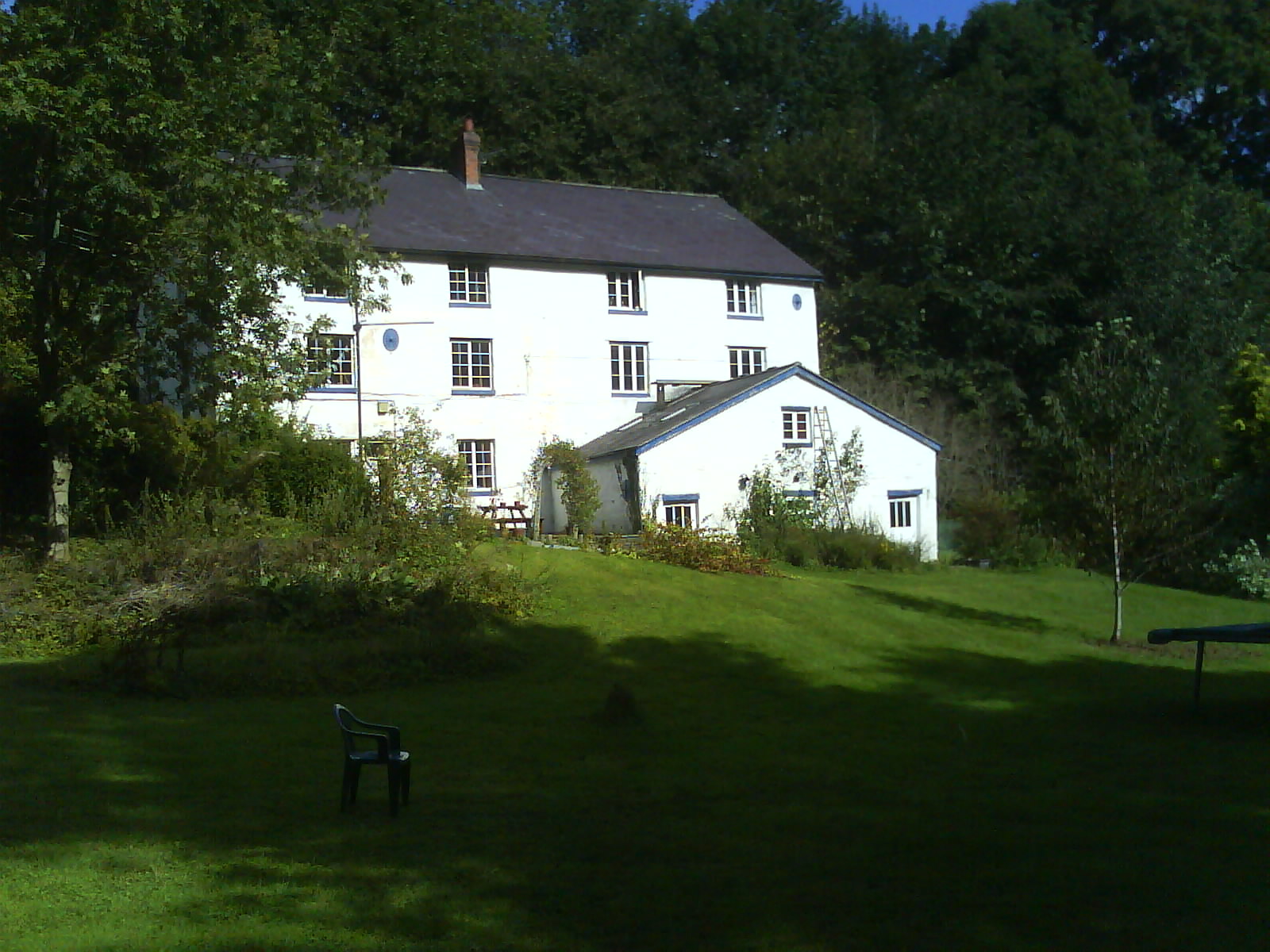
    Ty Brethyn – the "House of Cloth" - is a large old wool mill set in the hills behind the Welsh town of Llangollen. The old mill wheel was partly destroyed in the Second World War by a bomb, and since then it has hosted many people and many businesses. There is one large house, part of which was the weaving mill, and several outbuildings with lots of potential for future development.

    Now it has been purchased and is being renovated by a group of Order Members, and has become a new type of FWBO community. The house lends itself to being divided up into separate units but with connecting doors and some communal space. The property feels secluded, though it's only a 10 minute walk into Llangollen, which is on the A5 almost equidistant between the two FWBO retreat centres Vajraloka and Taraloka.

    It is new for at least two reasons. First, it is a new style of FWBO community, with families and single people living together with a mixed population of men, women, and children – seven people in all so far, with more still to arrive. Given that everyone has had to move, sometimes hundreds of miles, to Ty Brehin, the residents have had to consider carefully how to earn their livelihoods – and have come up with some innovative solutions. Tejapushpa, mother of Jaya, is an acupuncturist, still practicing part-time in Manchester and she has just set up a new practice in Llangollen; Satyavadita (Jaya's dad) is busy renovating the property (the cost of this was built-in to their initial budget); Kalyacitta has recently qualified in garden design and has set up a new gardening business; Kathryn and Vibhuti are parents of Phoebe, and Kathryn is a Career Coach, working mainly by phone and Vibhuti a mental health nurse.

    Second, it is new becasue it has a well thought-out ownership structure based on standard co-operative rules - which have, however, been carefully modified to suit their particular needs. They hope this may become a template for other similar groups around the FWBO. Legally it is known as the ‘Ty Brethyn Housing Coop’, but enshrined in the constitution is a short ‘mission statement’ and some ‘secondary rules’ which aim to ensure that the ethos and values remain Buddhist in the years to come. This has required some careful thinking-through of rights and responsibilities, with many complex issues having to be considered, eg what happens when children grow up or if one or more residents cease to be Buddhists. One ingredient in their formula is the role of ‘mentors’, or ‘Guardian Members', who are people who will be non-resident guardians of the ethos of Ty Brethyn.

    The property, and the five acres of land surrounding it, has been purchased using a mixture of capital contributed in the form of loanstock by the residents and a short term loan from a friend (or supporter) which will be repaid after 18 months by taking out a mortgage. This too has necessitated careful consideration, in particular considering how people might get their money back should they wish to leave.

    After much discussion the ‘exit terms’ have been clarified - members wishing to leave will get their capital back plus appreciation at a level set by the UK’s RHPI (Retail House Price Index) but capped at 8%. This and many other details took extensive homework and meetings spread over many months, the final details are still be thrashed out even though the property has now been bought and occupied. An important ingredient in their success was five days consultancy, paid for by a grant they obtained, from UpStart, a cooperative based in Somerset, who provided invaluable advice on how to modify the standard coop rules. They would be happy to provide further details of their legal structure - please contact FWBO News if you are interested.

    FWBO News wishes them every success in their new life.

    Labels: , ,

    Sunday, February 17, 2008

    Ordination at Sudarshanaloka, New Zealand

    On Sunday 17 February 2008, at Sudarshanaloka Retreat Centre in New Zealand, Pierrick Parigot was publicly ordained. His new name is DRIDHAMATI (Sanskrit with a dot below the 'r' and a dot below the second 'd'). 'He who has a firm, resolute or persevering mind'.

    Purna was the private preceptor and Buddhadasa the public preceptor.

    Sadhu!

    Labels: ,

    Friday, February 15, 2008

    Parinirvana Day

    Today, February 15th, FWBO Centres across the world will be observing Parinirvana Day, the anniversary of the Buddha’s entry into final ‘Parinirvana’.

    FWBO News is pleased to reproduce some excerpts from ‘Between Twin Sala Trees’, a talk given by Sangharakshita in 1983, in which he outlines the significance of the day and suggests some ways in which it might be observed.

    Sangharakshita says –

    “The first of my suggestions is that, if at all possible, we should observe the Parinirvana Day as a whole day’s celebration. We should read the Mahaparinibbana Sutta and chant the Vajrasattva mantra. The Mahaparinibbana Sutta is part of the Pali Canon, the sixteenth sutta of the Digha-Nikaya, and it gives an account of the last few months of the Buddha’s life, and especially it gives an account of the last day, or rather, the last night of the Buddha’s earthly existence.

    “Perhaps it’s not necessary in the course of our celebration of Parinirvana Day to read through the whole of the Mahaparinibbana Sutta. We can perhaps make a selection and read only those parts, only those sections which have a direct bearing on the Parinirvana itself or on the events leading up to the Parinirvana itself.

    “The Mahaparinibbana Sutta could be read aloud in the shrine room, perhaps people could take it in turns to read, perhaps Order Members could take it in turns to read. And of course one must remember to read slowly, by which I don’t mean very, very slowly - I simply mean don’t rush it. And mindfully, paying attention to what one is reading and to the meaning of what one is reading, and also loudly, and clearly, and distinctly, so that everybody can hear you.

    “The second of my suggestions for observing Parinirvana Day is that in the evening, during the performance of the Sevenfold Puja, we should make our observance of the Parinirvana Day also an occasion for remembering other deceased persons - not just the Buddha’s Parinirvana all those centuries ago, but also other deceased persons, especially Order Members, Mitras and Friends, who’ve died in the course of the previous year or so. We can place, perhaps, their photographs on the shrine, below images or pictures of Buddhas, Bodhisattvas and gurus.

    “And their full names, and the dates of their death should be read out either during or before the Sevenfold Puja. We can not only remember, not only commemorate Order Members, Mitras and Friends, in this way, but also the friends and relations of such if anybody wants to bring along the photograph or the name of anybody, near and dear to him or her, who has died, especially in the course of the last year. All should be remembered, on that occasion with metta”.

    Sangharakshita goes on to highlight some of the more significant episodes in the Mahaparinibbana Sutta: the Episode of the Mirror of the Dhamma; the Episode, or Teaching, of Subjective and Objective Refuges; the Episode of the Untimely Flowers; and the Episode of the Last Disciple. There are also some very interesting reflections on the different characteristics and ‘moods’ of the Buddhist Holy Places: Bodh Gaya, Kusinagar, Lumbini, and Sarnath.

    ‘Between Twin Sala Trees’ is available on FreeBuddhistAudio as either audio or text.

    FWBO News would be very pleased to hear from readers around the world how they chose to mark this anniversary, either individually or in company of others at Buddhist centres. Simply click the ‘Comment’ link below and send us your comments.

    Labels: , ,

    Thursday, February 14, 2008

    FWBO Johannesburg launches website

    The FWBO and TBMSG have some 80 Buddhist centres world-wide, on four continents – but very little presence in Africa. However, a little-known fact is that for some three years now the FWBO has had a centre in Johannesburg - a large and peaceful house situated in the suburb of Emmarentia. It is called Shantikula, which translates as 'Peaceful Tribe', and is run by a small but dedicated team: Ratnajyoti, Vajradhara and Wayne.


    They are celebrating the new year with the launch of a website, the first time they have had one – and even if you don't plan to be in Johannesburg any time soon you can now find out about their meditation and dharma classes, their courses for stress, anxiety and depression, their macrobiotic cooking, and even the organic vegetable garden! Find it at http://www.fwbojohannesburg.co.za/ – and go visit if you’re ever passing!

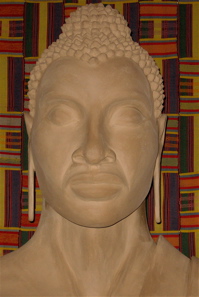
    We’re hoping more photos will appear on their site over time – among other things they have a very special Buddha rupa, carved specially for them following the traditional conventions of African carving – this makes it possibly unique in the Buddhist world.

    Labels: ,

    Wednesday, February 13, 2008

    Report from Chairs meeting at Dhanakosa, January 2008

    Last month some 40 Chairmen and Chairwomen from most of the FWBO’s European Centres gathered at Dhanakosa for the twice-yearly week-long meeting of the European Chairs Assembly. The meeting is a place where those taking responsibility for our Buddhist centres can come together for practice and friendship, besides discussing a very wide range of topics. This report, by Lokabandhu of the FWBO Development Team, aims to give a flavour of the meeting and to note some of the topics discussed.

    To begin with, there were a good number of people to say farewell to, and an equal number of ‘hellos’. It’s a tradition of the meeting to give both these a good deal of time so that people can be properly welcomed when they arrive and properly rejoiced-in when they leave. It was noteworthy that six of the seven new faces at the meeting were women; the present overall ratio among the Chairs is approx 2:1 men:women. As usual, most of the FWBO Development Team, who are employed by the European Chairs Assembly, were also there.

    The meeting got off to an adventurous start due to snowstorms: the coach from Glasgow was not willing to risk the last few miles along the lochside in the dark and we had to be ferried into Dhanakosa in a series of cars.

    The topics covered in the many discussions included –

    A thought-provoking paper by Dhammarati with his thoughts on how to ensure coherence across the many facets of the F/WBO. He has posted this on his blog.

    The need for us to find ways of telling our ‘story’ in ways that were open and did justice to the multi-facetted nature of our history. As part of this it was agreed to commission a fairly short pamphlet covering the main areas, specifically including links to other sources for those who wanted more detail. Many of these are already on-line at FWBO Discussion.

    A progress report on the FWBO International Retreat, coming up this May 22-26th. This is an ambitious new venture to replace FWBO Day, its looking good so far.

    The proposed ‘Virtual Buddhist Centre’ was mentioned but not discussed in much detail, it was agreed instead to conduct a more wide-ranging review of our main websites and how they could be better coordinated – there are now over 300 different FWBO sites! Click here for an early (and now discarded) prototype, it does however illustrate some of the breadth of sites available.

    A workshop on Team-Based Right Livelihood, highlighting in particular people’s expressed needs for (i) adequate support and long-term financial security, (ii) ongoing training and learning, and (iii) work as practice; as part of it we were led through a much-appreciated self-assessment of our own training needs. See the excellent resources on the FWBO Centre Support website here.

    The lack of youth at our centres was discussed: according to the Order Address List,) there are now only 4 Order Members outside of India under 30! Click here for some graphic charts from the Order Survey illustrating this. In November we will host a weekend of ‘interested parties’ later in the year to explore ideas to address this; please contact FWBO News if you would like to be kept informed of this.
    Results from the Order Survey itself were made available, click here to access them.

    Last but not least there were centre presentations by Glasgow and Newcastle; these are a regular feature of the meeting and are always fascinating glimpses into the past and into the nitty-gritty heroism involved in taking the Dharma to a new city. Glasgow’s was particularly interesting due to the long history of the Glasgow Buddhist Centre – we were, among other things, treated to a rare slide of an Upasikaa’s red kesa!

    Labels: ,

    Monday, February 11, 2008

    New opportunities on FWBO Jobs; other changes to FWBO News' website

    Several new jobs have been posted recently on FWBO Jobs; readers are invited to visit the FWBO Jobs site to check. These include posts at Windhorse:Evolution, the FWBO's largest and most successful Right Livelihood business, as well as volunteers needed for the upcoming FWBO International Retreat. In the past three months the site has had over 1,000 visitors from over 30 countries.

    There have been significant changes recently to the FWBO News website; regular readers who use our Feedblitz news-feed service are invited to take time to visit the site itself.

    Among other things three separate search facilities have been added to make it possible to easily find any reference to specific people or events across the FWBO’s extensive and somewhat sprawling network of websites. You will find these on the Resources page; they cover, respectively, the FWBO News archive; or all FWBO centre websites (over 100 to date); or the 170+ personal websites listed on FWBO People. A rich and, now, very accessible resource!

    A tag listing facility has also been added giving one-click access to all stories on particular themes: clicking (for instance) the ‘Engaged Buddhism’ tag brings up all previous FWBO News stories on that theme.

    We have added two ‘volumes’ of previous stories from FWBO News, each covering a two-month period and arranged in an easily-printable PDF document form. Taken together they reflect the remarkable diversity of events and projects going on around our Sangha. You can find these too on the Resources section of the site; we envisage adding further volumes every couple of months.

    Finally, by visiting the site itself you'll also be able to admire our visit counter, which shows the number of visitors and which country they come from – we have had over 10,000 visitors from 99 countries since November…!

    Suggestions for further enhancements are of course welcome.

    Labels: ,

    Saturday, February 09, 2008

    Dispatch from Delhi

    Saul is a mitra from the FWBO’s North London Buddhist Centre. Last month he travelled to India to team up with the Amida Trust, who have for some three years now been running English classes in Delhi under their ‘Buddhist voluntary service overseas scheme’. He sent FWBO News this report -

    “I’ve recently finished two weeks teaching very large classes of children from slum areas in Shahadhara in east Delhi. At first I couldn’t cope with it, or I felt I couldn’t cope with it. Then I became rather accustomed to it and I've missed it on leaving.

    Classes were hectic affairs with anything from 45 to 70 children there. Shabbily dressed with big open smiles and irrepressible enthusiasm. I say hectic because children were coming and going from the classroom during the class. When I commented on this I was told that it was better than before!

    These classes were usually conducted in half built Buddhist viharas in the slum districts. The conditions were extremely basic. Blackboards, when there were any, were crude and basic. Power cuts would frequently plunge the vihara into darkness. Equipment minimal. Paper rare and books next to non-existent.

    We travelled to these outreach classes on rickshaws or in auto-rickshaws “tuk-tuks’ through the chaotic Delhi traffic. All manner of traffic: bicycles, motor bikes, ox carts all vied with lorries, buses and cars. The rules were pretty minimal, nobody worried too much about traffic lights or the right of way, not everyone even drove on the same side of the road. I confess I found it all rather exciting.

    Outside the vihara there was the seething mass of humanity: beggars and street vendors, endless stalls and tiny stores; incessant activity and the omni-present smell of sewerage. Sometimes our classes were conducted in order to increase the harmony in conflict torn communities. Occasionally they were in relatively harmonious Buddhist communities. Their poverty was what they all had in common.

    After two weeks’ I was used to it! The classes were led by two spirited individuals – Shiasnu (Joy) and James Goodman – who against all odds managed to maintain their teaching. We were working for ADEPT – the Amida Delhi Education Project Team. At first I can’t say I really I really warmed to their approach, which involved lots of song and movement. Then I realized that actually it did really work because it motivated and enthused the young learners. Mostly I’ve been used to teaching adults so it was a bit of a culture shock. The sessions with the children didn’t seem like ‘real lessons’ but then I'd been thrown into a situation where they didn’t necessarily have blackboards, only occasionally notebooks, and so on. Use of movement motivated them and they clearly enjoyed the classes. Whenever someone did well Joy would call out ‘give that child a sticker’ and they would proudly walk out to the front of the class to get their sticker. The teachers refused to allow any smacking to discipline the children and they tended to get overexcited and classroom control seemed problematic. Then I started to realize that they were actually succeeding in increasing the confidence and self-esteem of these children.

    At first I found it all rather exhausting and overwhelmed by these classes. Delhi in midwinter was a hard way to start in India, not even the food would stay in my stomach! Everything, just everything had changed. But I got used to my little room on the roof of the block, even when the cold North West winds blowing off the Himalayas tried to invade it. My tolerance of noise shot up, and later, as I started taking tea at roadside cafes with the workers, neighbours started to recognize me, little routines started to take over – and then, so quickly, my stay there was over and it was time to take the train south to Nagpur and more English teaching with the TBMSG’s many projects there…

    Labels: , , ,

    Friday, February 08, 2008

    Change to wording of Heart Sutra

    Following some months of consultation, Mahamati, the International Order Convenor of the WBO, has announced a small change to the wording of the Heart Sutra as recited in the FWBO.

    The new wording is

    All things are by nature void
    They are not born or destroyed
    Nor are they stained or pure
    Nor do they wax or wane.


    These replace the well-known line "all things are the primal void” and the section immediately following. A full copy of the text of the new version can be downloaded from the Resources section of FWBO News here.

    The change was approved by Sangharakshita in order to avoid the danger of referring to "the void" i.e. making sunyata into a 'thing', while keeping the rhythm and flow of the original.

    Windhorse Publications will be reprinting the English Language edition of the FWBO Puja book soon, with the new version of the Heart Sutra included.

    Those of a nostalgic disposition are reminded that the 'primal void' lives on in Kavyasiddhi’s beautiful rendition of the Heart Sutra – sung at last summer’s International Order Convention and posted on Videosangha.

    Labels: ,

    Wednesday, February 06, 2008

    New feature article - "Climate Change: towards a Buddhist Response"

    FWBO News is pleased to present another article in its occasional series of Feature Articles. ‘Climate Change: towards a Buddhist Response’ is by Akasati, a long-standing member of the Buddhafield team. Her long and thoughtful piece includes – among other things – the following sections

    • climate change: causes, evidence and impacts
    • some objections & arguments
    • offsetting?
    • sustainability: ‘the third revolution’
    • the great turning
    • climate change in the context of traditional buddhist teachings (a detailed look at ethics, the notion of ‘hidden dukkha’, the teaching of ‘no separate self’, emptiness and compassion, and finally, revisiting the simple life)
    • levels of action
    • further reading
    • other resources

    Highly recommended!

    Labels: ,

    NVC and Sociocracy in the FWBO

    Shantigarbha is an Order Member living in Cambridge, UK, where he has founded a training business ‘Seed of Peace’. He specialises in ‘Non-Violent Communication’, or NVC, and has recently returned from a six week trip running NVC trainings in India and Sri Lanka, including a live interview introducing it on Sri Lankan TV. Several Order Members have qualified in NVC and are actively involved in training worldwide – Aniruddha and Kumarajiv in India, Locana in the UK, among others.

    Next in his schedule is a weekend introduction to ‘Sociocracy’, which is a system for designing (or redesigning) organisations that he feels may be particularly suitable for groups such as the FWBO.

    Shantigarbha writes -

    “We've arranged for Philip Seligmann, a Sociocratic consultant from the Centre in the Netherlands, to come over to lead a weekend at the Cambridge Buddhist Centre. Philip is on the Board of the Sociocratic Centre, and has brought Sociocracy into several organizations, including the Dutch Buddhist Broadcasting Corporation. The dates are: February 22-24; the Friday evening will be a free Introduction, open to all, and will form the first part of the training for those who stay on for the Saturday and Sunday (10am to 5pm both days)”.

    Sociocracy was first introduced to the Order last summer on the biannual Order Convention, after which this report appeared in the Order’s journal ‘Shabda’:

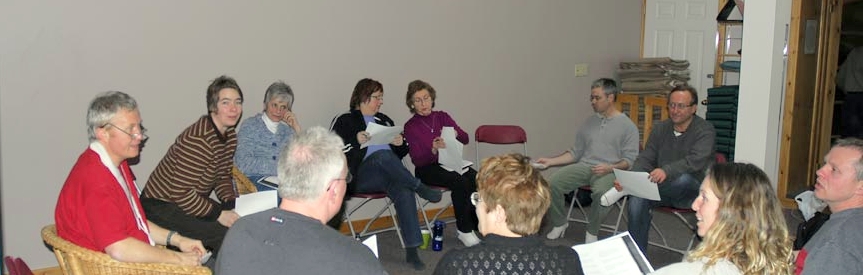
    “Sociocracy is a structured way for groups to make decisions & interact with other groups. As such it may be relevant to many situations in the F/WBO and we were interested to hear the NVC community are considering adopting it for much of their internal organisation. It is particularly suitable in situations where everyone needs to be taken into account and where each person needs to be valued equally. More specifically, it is suitable for groups which are interacting regularly and united in aim.

    Sociocracy started with an attempt to bring Quaker principles into a Dutch engineering laboratory. Hence the language is technical and the procedures fairly precisely structured. It is something which needs some effort to learn but which, once learned, becomes more and more fluent and flexible. It was noteworthy that Sociocracy can work alongside any conventional leadership system and can be introduced to only one part of an organization or for only one issue.

    Some of the basic governing principles are –

    • In meetings, some people are elected to temporary roles eg a facilitator
    • All organizational processes are seen in terms of circles, with discussion proceeding in 'rounds' eg rounds for clarification/nominations/objections/consent
    • All decision-making is by consent (with consent defined as the absence of 'paramount objections' ie no absolute "Nos", ie, a solution which is within everyone's “range of tolerance”)
    • Different levels of the organisation are 'double-linked' to ensure smooth information flows up & down & across.

    There’s lots more information available on the sociocracy website www.governancealive.com. Personally we were impressed with the clarity of the process and the care taken to ensure everyone has a chance to be heard. However everyone involved in a sociocratic meeting would need to make a significant investment to learn how it works, and while this is happening, meetings could seem slow or cumbersome. Since Shantigarbha wanted us to have some real experience of sociocracy in action, our session could be summarised, not unfairly, as nine Order Members taking an hour to discuss who was going to make a report into Shabda!

    Anyone interested in the Cambridge weekend is asked to contact Shantigarbha as soon as possible.

    Labels: , ,

    Monday, February 04, 2008

    FWBO International Retreat update

    The FWBO’s first International Retreat is taking place in May, at Taraloka, in Shropshire, UK. Vajragupta is the overall organiser and recently sent FWBO News this update – including a request for help!

    “The bookings are now starting to flow in - I'm optimistic it is going to be a big event. After some hitches, the International Retreat website can now take on-line bookings in no less than five languages – English, German, Spanish, French, and Dutch. Of course people can also download the postal booking form or use the brochures which should be available at all FWBO Centres.

    The programme is coming together, based round the themes of Wisdom, Absorption, and Compassion, with talks, pujas, and groups led by some of the FWBO’s best teachers - Padmavajra, Ratnaguna, Parami, Ratnadharini, Sona, Vidyamala, Maitreyi, Kamalasila, Vessantara - with more to be arranged!

    Capacity is 500 people, so book soon…

    A team of volunteers is needed to set-up, run, and set-down the event. Volunteers will need to be available from Sunday 18th May and, after the event, until 28th May. Anyone interested would need to be willing to camp and work hard, including physical work – however work duties won't be so heavy as to stop you taking part and enjoying it too. There will be a retreat-like programme and teaching during the set-up. See FWBO Jobs for more details.

    Newcomers and children welcome
    The programme and teaching for the adults will be aimed predominantly at those who have been meditating and attending an FWBO Centre for at least a few months. However, anyone who’d like to bring a family member who is new to the FWBO, or who does not meditate, is welcome to, and there will be some basic meditation instruction available.

    Children are welcome on the retreat. There’ll be a talented and experienced crew on hand to help parents make the most of the retreat. We are not providing a crèche, but there are a variety of facilities available for children - a toddler’s tent where you can take your young one to play in a safe environment, with toys and games provided; for older children there’ll be arts, craft, sports, bushcraft and other activities laid-on for a couple of two-hour slots each day (one slot in the morning and one in the afternoon). In the evenings there will be storytelling and ritual suitable for both children and adults.
    The retreat is free for under-3’s and 3–16 year olds can attend for half-price. Check the children's page on the website for updates.

    Labels: ,