Sunday, June 12, 2011

Poetry in Manchester

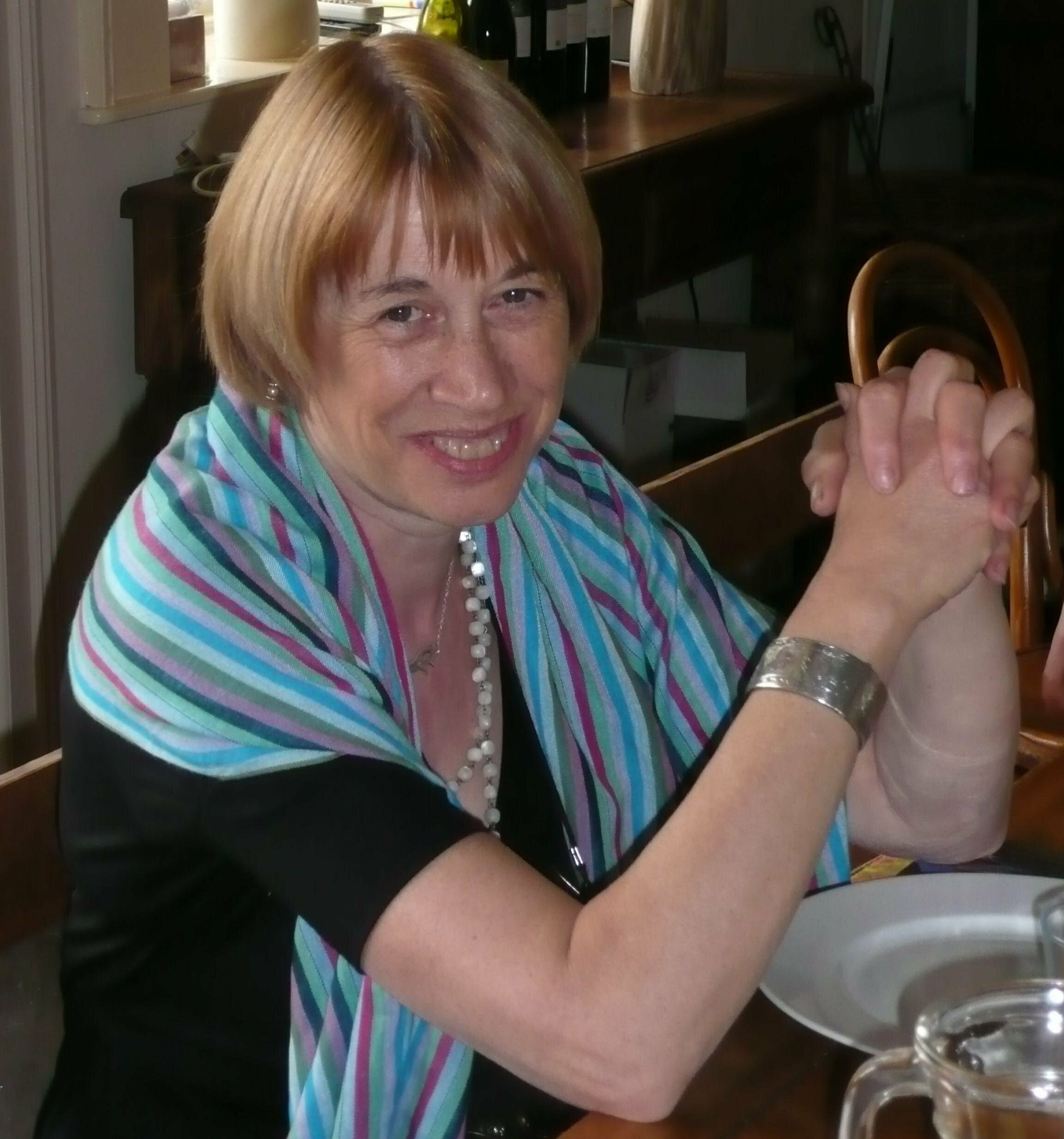
Aryamati, an Order Member and writer from Manchester UK, writes saying - “When there’s a space, l'd be grateful if you'd include this in Triratna News:

"Triratna’s Manchester Buddhist Centre has formed a weekly Poetry group, where The Poet’s Way by Manjusvara has guided recent work.

"It's good to report that Aryamati has just won a Poetry prize at the University theatre, for a poem on Manchester - copied below. Also, the serious Manchester-based writing group Womenswrite is celebrating its 20th birthday with a book of short stories entitled ,'life, death...the whole damn thing' which impressed the UK’s Arts Council to renew its grant. One of Aryamati's stories, to be published in the book, was inspired by Ananda and his Wolf at the Door workshops: to make a story out of a list, in this case recalling a saintly godmother's life and death.

"Bhante encourages us to use our imaginations, to deepen meditation - and re-imagine the Buddha. He has helped those of us who try to write, with his own volumes of poetry. We owe gratitude to the encouragement we receive in Triratna for the developing of creativity, sharing ideas and practice.

BUILDING THE MANCHESTER CANAL 1820
I was young once – now old at twenty-four
each unlit dawn I walk five miles to work
to lay rough-hewn blocks along their canal.
But towpaths we build stretch right to the sea.


This labour separates my skin from my bones
its grime slimes our mouths, hands, feet, clothes
the muck we dig out for their freshwater canal –
It all started here, in Manchester's guts.


Foreman strides up, warm coat on, early as usual
‘We'll finish the towpath this month, if it kills me'
May not kill you, but a mate's sure to die.
Spades on tired shoulders, we march to his orders,


We dig hours all morning, we dig with bruised shoulders
weeks of hoisting stone on stone over rough rope
Some days we sing - till our throats stop croaking;
after 600 wounded, too scared to revolt.


And storms brew in this muddied, dank air
girders drown, locks sink, our names drown.
We build while they dance, we dig vast tombstones.
It all started down here, from our bodies and guts.

Labels: , ,

Sunday, May 15, 2011

Sweetheart, Come!

Amitajyoti writes from Triratna’s London Buddhist Centre to say - "Dharmacharini Vishvantara has won a commendation in the Larkin and East Riding Poetry Prize 2011 judged by Douglas Dunn. This is the poem she won the commendation for.
Vishvantara 

Sweetheart, Come! (1909)

The husband’s visits are generally deferred
though she writes to him daily: ‘Sweetheart, Come!’
Her letters tend to be just those two words.

Two eminent physicians have concurred
dementia praecox. Nothing can be done.
The husband’s visits are generally deferred.

Pencil strokes like feathers of dark birds
form text in bars or columns like a sum.
Her letters tend to be just those two words.

His address is printed clear and undisturbed,
yet time will show another recipient won.
The husband’s visits are generally deferred.

The warders boast no tantrums have occurred.
At mealtimes they shout Cheer up, Sweetheart Come!
(Her letters tend to be just those two words.)

Hours go by and find she’s hardly stirred.
White space turns grey, then black and finally dumb.
The husband’s visits are generally deferred;
her letters tend to be just those two words.

Labels: ,

Saturday, April 09, 2011

Poetry and the Provenance Of Pleasure - new article by Maitreyabandhu

Maitreyabandhu, an Order Member from Triratna’s London Buddhist Centre, winner of a number of poetry prizes (and well-known to readers of Triratna News as a result), writes with news of his recent article in the current Poetry Review. He says “It’s called ‘The Provenance Of Pleasure’ and aims to explore what a Buddhist vision of poetry might look like. You can read it on a PDF at this address. Hope you like it. Love, Maitreyabandhu ”.

We’ve taken a look, and discovered a whole issue devoted to the theme of poetry and spirituality. The editors introduce the topic by saying "It’s easy to assume that spirituality is an old-fashioned topic: one that poetry outgrew when modernity began. Yet we can reclaim the term, and use it to glimpse what various faiths feel like from the inside. Spirituality isn’t just a way to get lyric lift into a poem – it must colour the poet’s whole relationship to poetry…"

Maitreyabandhu begins by quoting David Constantine’s poem ‘Pleasure’, from his 2004 collection A Poetry Primer, going on to say “I want to explore the kind of pleasure described in David Constantine’s poem from a Buddhist point of view. I want to do this because I believe Buddhism offers fresh insights into the spiritual value of poetry. I use as my model an ancient Buddhist Sutta (literally “thread of discourse”) called the Honeyball Sutta, which describes how our mind is patterned and structured. What I hope to show is that the human and spiritual value of poetry is to be found in the end-in-itself pleasure that David Constantine’s poem affirms.

After introducing and discussing quite a number of Buddhist technical terms, he ends with a reflection on why he’s driven to write poems (and enter them into poetry competitions!), by saying “I’m writing to give myself, and hopefully others, non-appropriative (niramisa) pleasure. I want to participate in that strange magic of poetry – its capacity to enhance creaturely life, mature vitarka (self-awareness) and suspend the ruminations of prapañca”.

To find out more - and to discover the meaning of those terms - you’ll have to read the full article! It’s available at www.poetrysociety.org.uk/content/publications/review/pr1011

Labels: ,

Saturday, March 19, 2011

Maitreyabandhu writes from the London Buddhist Centre to say “I'm delighted to hear I’m one of the four winners of the annual Poetry Business Book and Pamphlet Competition. The prize is £500 plus a pamphlet of twenty-four  of my poems published in May this year by Smiths/Doorstep.  This will be my first pamphlet so I am especially pleased. It is  a well known competition, so the pamphlets often get reviewed in the poetry press.
 
“The judge, Simon Armitage, said my collection was ‘Nostalgic, but not sentimental or wistful, the poems have a real sense of the here and now. They strike home.’  My collection is called The Bond, and one of the poems, Retrospect,  is copied below.

“Also I'm publishing a 10 page article called The Provenance of Pleasure in the next (Spring) issue of Poetry Review.  It’s based on the Honeyball Sutta, from the Majjhima Nikaya, which I’m applying to poetry”. 

Several talks on the Honeyball Sutta are available from Triratna’s FreeBuddhistAudio, including several by Subhuti.  It's a classic text which plays a central role in the early Buddhist analysis of conflict. Click here to download.  

Retrospect

In my story, you walked to school that day,
left the moped in the garage with your
gauntlets on the seat, caught up with me,
suggested we should meet back at your house,
your brother still at work. I tell myself
we carry on from there, off and on
until I move away. Now you’re twenty-five
and have learnt the art of smiling. We talk
about that time you waited in the bath
next to your parents’ kitchen after school.
But the story won’t make sense, the facts
you left too small to be given consequence.
I can’t put explanations in your mouth.
You just stand there in the kitchen doorway,
pencil-slim and pale and carrying a helmet.

Labels: ,

Tuesday, January 04, 2011

'Poetry East' at the London Buddhist Centre

Maitreyabandhu writes from the London Buddhist Centre with news of the 2011 line-up for Poetry East, their new venture showcasing the work of well-known contemporary poets, exploring the relationship between poetry and spiritual life. He says -  "Hi there all, I'm particularly proud of my line-up for Poetry East next year, so I thought I'd let you know! Here's the details... Love Maitreyabandhu

January 22nd
Penelope Shuttle  has published nine collections of poetry including Redgrove’s Wife, which was short-listed for both the Forward and the TS Eliot Prize. Her new collection, Sandgrain and Hourglass, was a PBS recommendation. 'Her poems of mourning...are among the best she has written.' Elaine Feinstein, The Times.

March 26th
Jo Shapcott won the Commonwealth Poetry Prize for Best First Collection, the Forward Poetry Prize, and the National Poetry Competition (twice). She is Professor of Poetry at the University of London and President of the Poetry Society. Her most recent collection Of Mutability, was shortlisted for the Forward Prize.

October 1st
Jackie Kay won the Cholmondeley Award in 2003. Her Maw Broon Monologues, performed at the Tron Theatre in Glasgow were shortlisted for the Ted Hughes Award for New Work in Poetry. Her latest book Red Dust Road, a memoir about meeting her Nigerian birth father, was sterilized on BBC Radio 4. In 2006, she was awarded an MBE, for services to literature.

November 19th
Bernard O'Donoghue is a poet and literary critic. His 1995 collection, Gunpowder won the Whitbread Poetry Award. His Selected Poems was published by Faber and Faber in 2008. He received a Cholmondeley Award in 2009. Bernard is a Fellow of Wadham College, Oxford, and a senior member of the Oxford University Poetry Society

Labels: , , ,

Sunday, December 19, 2010

Art & Literature on Free Buddhist Audio

Free Buddhist Audio
Spreading the Dharma
Sharing our Practice
Connecting our Community Worldwide

Engagement with the Arts has long been a distinctive feature of the Triratna approach to the Dharma and Sangharakshita's view of spiritual practice in general. Free Buddhist Audio is very pleased to announce our growing collection of talks in the realm of Art & Literature. As well as a keystone recording featuring Sangharakshita in discussion with the celebrated poet Kathleen Raine, our Triratna Arts section now features a fantastic series from the Poetry East project organised at the London Buddhist Centre.

Showcasing the work of well-known contemporary poets, exploring the relationship between poetry and spiritual life, Maitreyabandhu, Director of the London Buddhist Centre, hosts bi-monthly conversations between award-winning contemporary poets and himself, also a recently decorated poet. So far Fiona Sampson, Hugo Williams, Mimi Khalvati, and David Constantine interviews have been uploaded and shared through Free Buddhist Audio's Community Places.

Essential listening for lovers of the Arts!

The Poetry East format is simple: each poet is asked to provide two or three poems from the canon that have influenced their poetry; which are read first, leading the audience into a short interview with the poet, hosted by Maitreyabhandhu. He explores with them their creative life and work with emphasis on their influences, and poets they admire. This is followed by a poetry reading and questions and answers from the floor.

As the live evening is preceded by a short led meditation in order to provide the best listening conditions externally and internally, the team at Free Buddhist Audio would like to offer the same for our listening audience. Browse our guided introductions, led practices and other meditation resources from practitioners all over the world.

The team at Free Buddhist Audio is working hard to create dynamic webspaces where our community of practitioners share their understanding of the Buddha's teaching. We need your generous contributions to continue our work. Please consider a donation to Free Buddhist Audio today!


Labels: , , ,